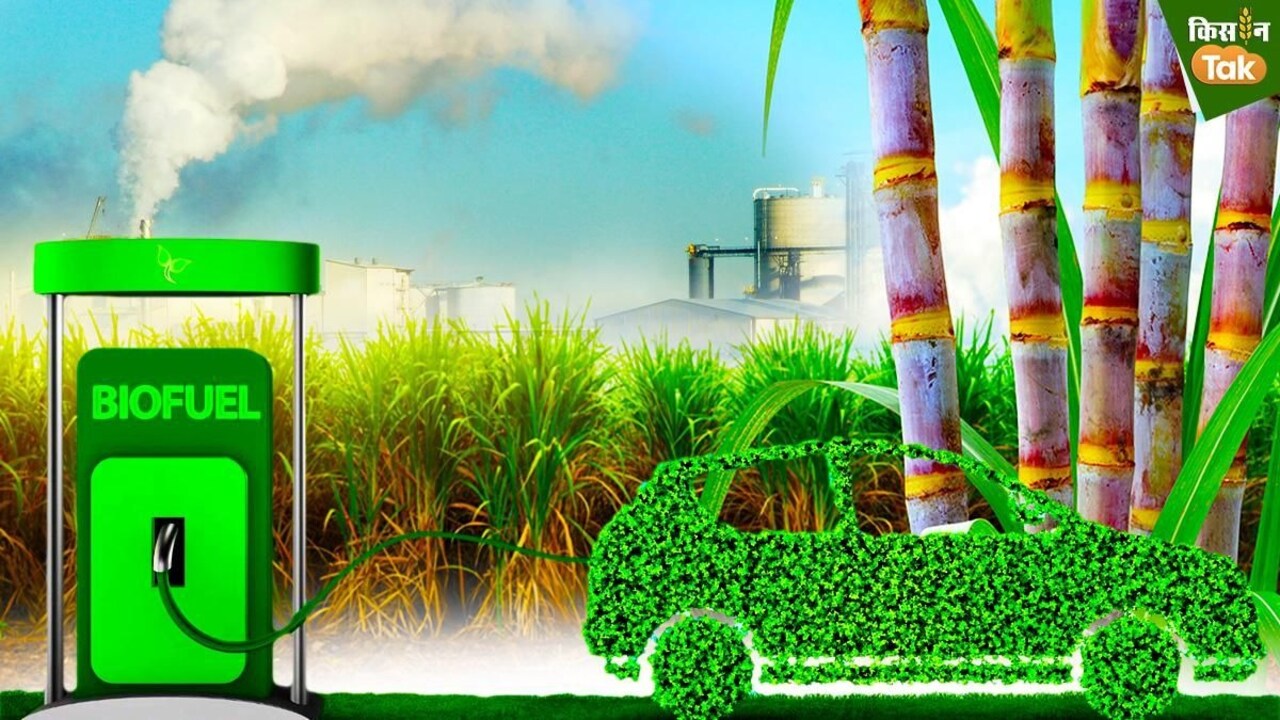
Overview of the Ethanol Blended Petrol (EBP) ProgrammeThe Ethanol Blended Petrol (EBP) Programme has emerged as a key initiative in India's energy transition. It aims to improve energy security, support farmers, and reduce environmental impacts. The programme promotes the use of domestically produced renewable fuel.
Ethanol Blending ProgressEthanol blending in fuels has increased from less than 1.5% in 2013-14 to 20% in 2025-26, five years ahead of the target. Ethanol procurement rose from about 38 crore litres in 2013-14 to a projected 1,200 crore litres in 2025-26, with production capacity expanding nearly fivefold.
Energy Security and Economic BenefitsIndia imports 88.5% of its crude oil. Ethanol use reduces this dependence, saving ₹1.90 lakh crore in foreign exchange and substituting over 310 lakh MT of crude oil, while cutting approximately 930 lakh MT of CO2 emissions. Additionally, farmers gained ₹1.60 lakh crore from ethanol production.
Addressing Common MisconceptionsClaims that E20 blends cut mileage significantly are misleading. Real-world mileage is influenced by driving habits and vehicle maintenance. The ethanol used is high-octane, enhancing performance rather than harming it. Insurance coverage for vehicles using E20 remains valid, contrary to circulating myths.
Related current affairs
- No decision yet on increasing ethanol blending in petrol: govt
- Ethanol Blended Petrol (EBP) Programme: PIB FAQ on E20 rollout, vehicle compatibility, pricing and impacts
- Ethanol Blended Petrol Programme – Q&A (clarifications and FAQs)
- Key Policy Measures Announced in 2026 Supporting Manufacturing, Energy Security, Trade/Investment, and Agriculture
- New LPG connections still on hold amid West Asia tensions
- India improvising on the fly as Strait of Hormuz waters remain still