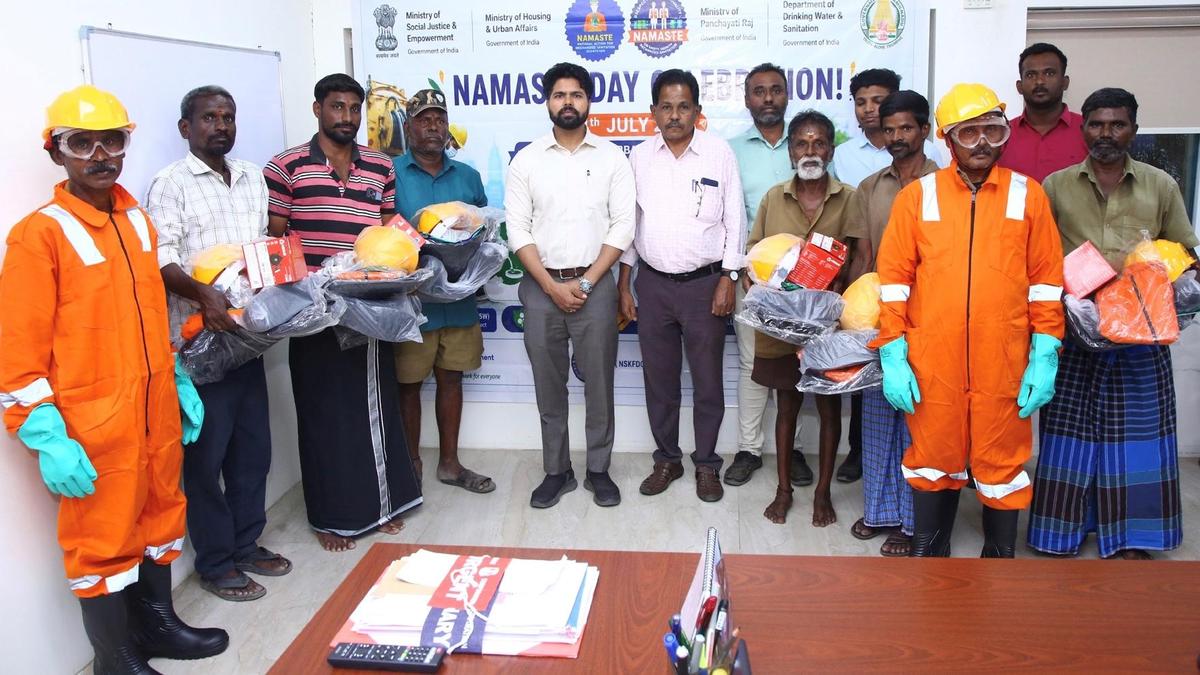
The Government of India says the National Action for Mechanised Sanitation Ecosystem (NAMASTE) is a flagship scheme to improve the safety, dignity, and social security of sanitation workers while shifting sanitation operations towards mechanised cleaning. The subject is important for UPSC because it sits at the intersection of social justice, occupational safety, urban governance, and technology-led service delivery.
What the NAMASTE Scheme seeks to do
The scheme is jointly implemented by the Ministry of Social Justice and Empowerment and the Ministry of Housing and Urban Affairs. The stated aim is to eliminate hazardous manual cleaning of sewers and septic tanks, promote mechanised cleaning practices, and build welfare support around sanitation work.
The Union Minister of Social Justice and Empowerment, Dr. Virendra Kumar, said the scheme reflects the Government's commitment to dignity, safety, and social security for sanitation workers. He linked mechanisation, skill development, healthcare, and livelihood support with the goal of zero fatalities in sanitation work.
Key features highlighted in the release
The release says sanitation workers are being identified and profiled under the scheme and are being provided multiple forms of support. The package covers protection, health, training, and income opportunities.
Related current affairs
- NAMASTE scheme: 89,915 sewer & septic tank workers validated; 87,037 PPE kits distributed
- Centre set to expand mechanised sanitation scheme to rural India
- National Workshop on Mission Zero to End Fatalities in Sanitation Work
- NAMASTE-SUY helps sanitation worker Neeraj set up mechanised sanitation enterprise under Swachhta Udyami Yojana
- Nationwide survey (2024-25) finds no manual scavengers; NAMASTE rehabilitation continues
- NHRC takes suo motu cognizance of sanitation worker death after inhaling toxic gases during NOIDA sewer cleaning