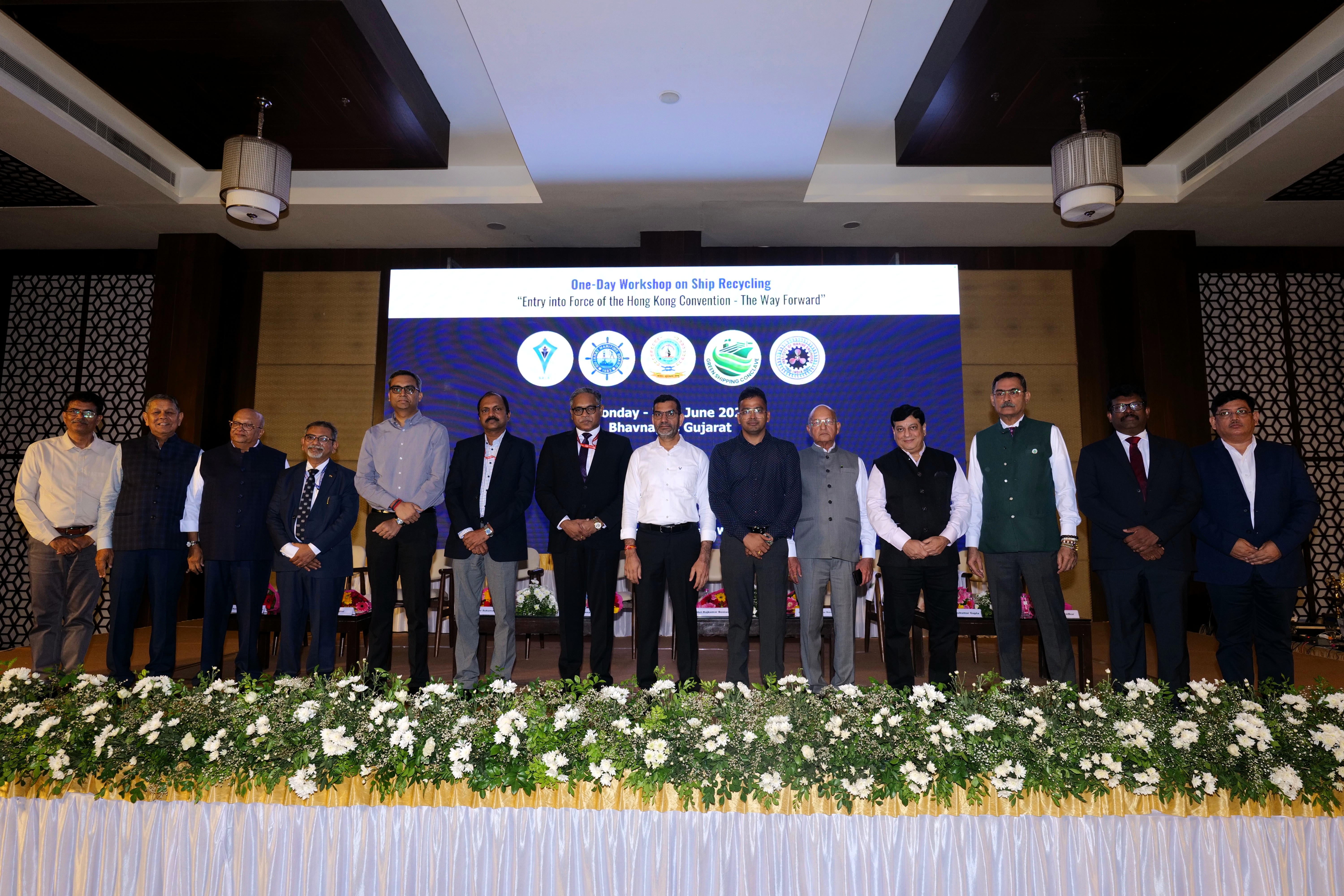
India’s leadership in ship recycling at Alang-Sosiya; HKC compliance and worker welfare measures
PIB states that India’s Alang-Sosiya ship recycling yards expanded HKC-aligned compliance, worker welfare, and capacity planning, supported by domestic laws and credit incentives.
GS1GS2GS3PIBGS3Hong Kong International Convention for the Safe and Environmentally Sound Recycling of Ships (HKC)Ship recycling regulation (Recycling of Ships Act 2019; Rules 2021; Regulations 2026)Workers’ health, safety and welfare at shipbreaking yards
What happened (as per Government statements)?
The Ministry of Ports, Shipping and Waterways (MoPSW) and the Gujarat Maritime Board (GMB) reported actions to strengthen compliance at the Alang-Sosiya Ship Recycling Yard in Gujarat with the Hong Kong Convention (HKC), 2009 (an international framework for safe and environmentally sound ship recycling). The reported compliance work is tied to domestic laws and to worker welfare and environmental safeguards within the ship recycling yards.
Scale of ship recycling in India and Alang-Sosiya’s operational base
Government statements report that India became the world’s leading ship recycling nation in 2025, accounting for 35.4% of global ship recycling volume. Alang-Sosiya Ship Recycling Yard, established in 1982–83 in Gujarat, handles 98% of India’s ship recycling activity.
At Alang-Sosiya, the Government states the yard has 128 currently operational plots with recycling capacity of 4.5 million LDT per annum (LDT = Light Displacement Tonnage). Since inception, the Government reports that Alang yard recycled more than 8,900 ships aggregating more than 71 million LDT.