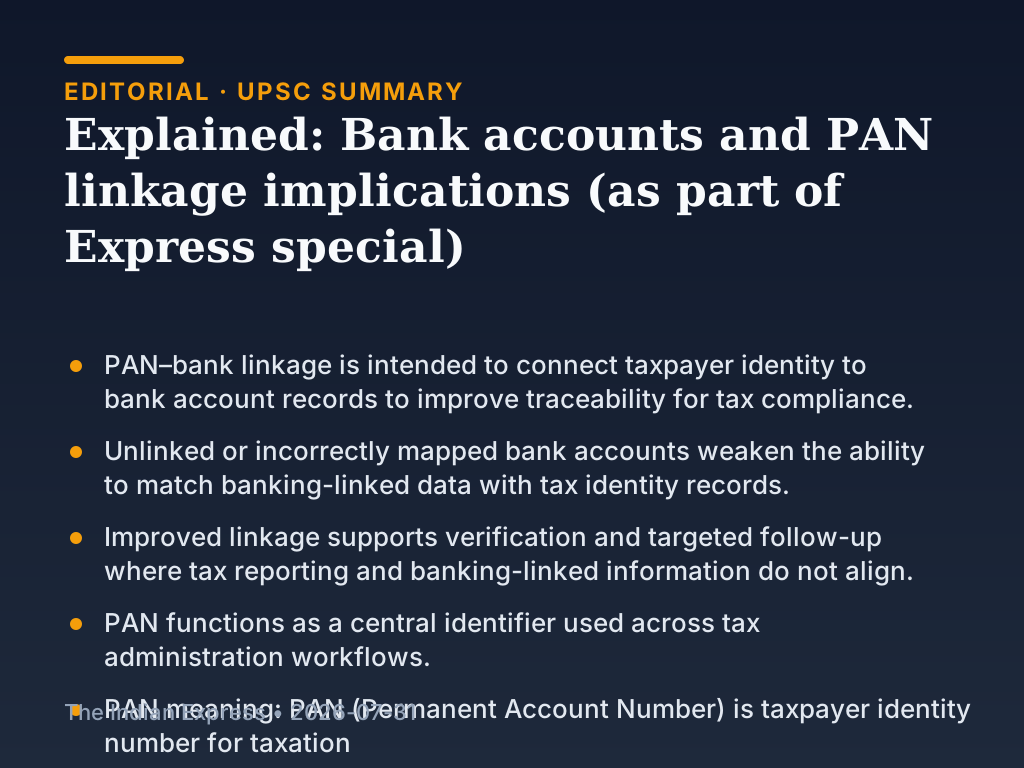
What happened: PAN linkage is used to connect taxpayer identity with bank accounts
PAN (Permanent Account Number) linkage with bank accounts is a compliance requirement used in India’s tax and financial monitoring ecosystem. The policy goal is simple: the same taxpayer identity should be mapped to bank accounts so that financial information can be matched with tax records, enabling faster checks for reporting accuracy and reducing opportunities for non-compliance.
Background and earlier position: PAN as the identity anchor for tax administration
PAN is the central identifier used across tax administration. When PAN is properly linked to bank accounts, tax authorities can match banking-related financial flows to the correct taxpayer profile. When PAN is not linked, the administrative chain breaks: banking data cannot be cleanly connected to tax records, which weakens verification and follow-up.
What changed now: the compliance focus shifts to unlinked accounts and mapping failures
The recent compliance framing emphasises that unlinked bank accounts are a governance risk because they create blind spots in identity mapping. The compliance implications are not only about ‘missing linkage’ but also about incorrect or incomplete mapping, which leads to mismatch between taxpayer identity and bank account records.
Related current affairs
- EXPRESS special: From govt to pvt: 3 yrs, 1.54 lakh J&K Bank accounts were not linked to PAN (Explained)
- Express Special (advertising-like branding box) – From govt to pvt: In 3yrs, 1.54 lakh J&K bank accounts were not linked to PAN
- EXPRESS special: From govt to pvt: In 3yrs, 1.54 lakh J&K Baks account links not linked to PAN (Explained/graphics)