What happened (as raised in the letters cluster)
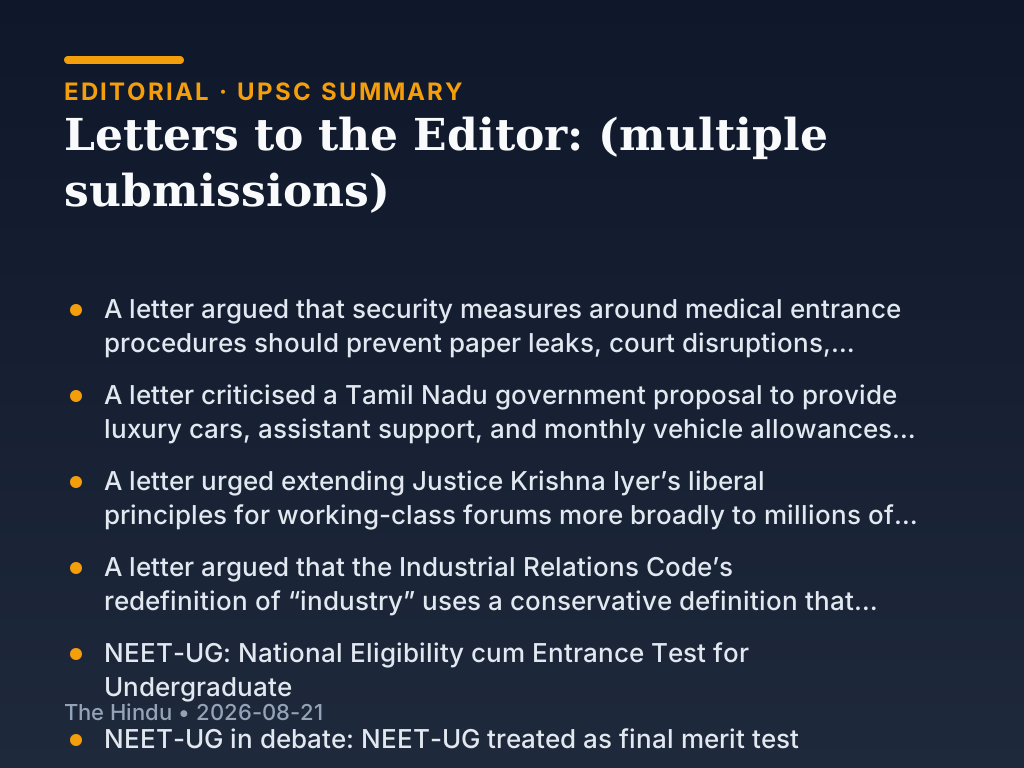
A set of letters under “LETTERS TO THE EDITOR” raises three main governance and law-and-order concerns and one labour-law concern. The letters discuss (1) the integrity and security of medical entrance procedures, especially NEET-UG; (2) the fiscal and governance logic behind a Tamil Nadu proposal to provide luxury cars and monthly vehicle-related allowances to MLAs; (3) the scope of judicial principles for working-class forums, referencing Justice Krishna Iyer’s approach and later reinforcement by Justice B.V. Nagarathna in later rulings; and (4) the consequences of how “industry” is defined under the Industrial Relations Code for workers who may not fit the definition and therefore may face weaker protection.
Background and earlier position
Medical entrance examinations like NEET-UG depend on secure question paper and process integrity. The letters treat paper leaks, court disruptions, protests, and manipulation as governance risks that harm genuine aspirants who view NEET-UG as the final merit test. For labour and working-class forums, the letters invoke Justice Krishna Iyer’s liberal principles for widening access for working-class disputes. The letters also refer to later reinforcement by Justice B.V. Nagarathna, including reference to the Bangalore Water Supply context, to indicate that courts have previously revisited the reach of worker-related principles. For labour law, the letters focus on the Industrial Relations Code’s redefinition of “industry” and argue that a conservative definition can exclude some kinds of work, leaving parts of the working class vulnerable when worker protections depend on the legal categorisation of the workplace.
What changed now (what the letters ask for, and what they claim is at stake)
The letters do not report a single new government action in the cluster; instead, they ask for stronger prevention and clearer application. 1) Exam integrity: The letters argue for security measures around medical entrance procedures that block paper leaks, prevent disruptions linked to court processes, and curb manipulation and protests that disturb the process. The letters also warn against unfair outcomes where “unworthy candidates” might become doctors, presenting fairness to aspirants as a core policy goal. 2) Fiscal priorities in Tamil Nadu: One letter criticises a Tamil Nadu government proposal to provide luxury cars, assistant support, and monthly vehicle allowances to MLAs. The letter frames the proposal as fiscally reckless when public health, education, and employment needs are pressing, especially in an environment of inflation and infrastructure issues in local areas. 3) Judicial principles for working-class forums: Another letter urges that Justice Krishna Iyer’s liberal principles for working-class forums should be extended more broadly to millions of workers. At the same time, the letter notes that Justice B.V. Nagarathna’s later rulings have reinforced such principles, indicating continuity in judicial approach. 4) Labour law definition of “industry”: A further letter argues that the Industrial Relations Code’s redefinition of “industry” uses a conservative interpretation that excludes some activities. The letter claims that this exclusion leaves parts of the working class without adequate protection, and it concludes that workers should organise rather than relying only on legislation or court interpretation.