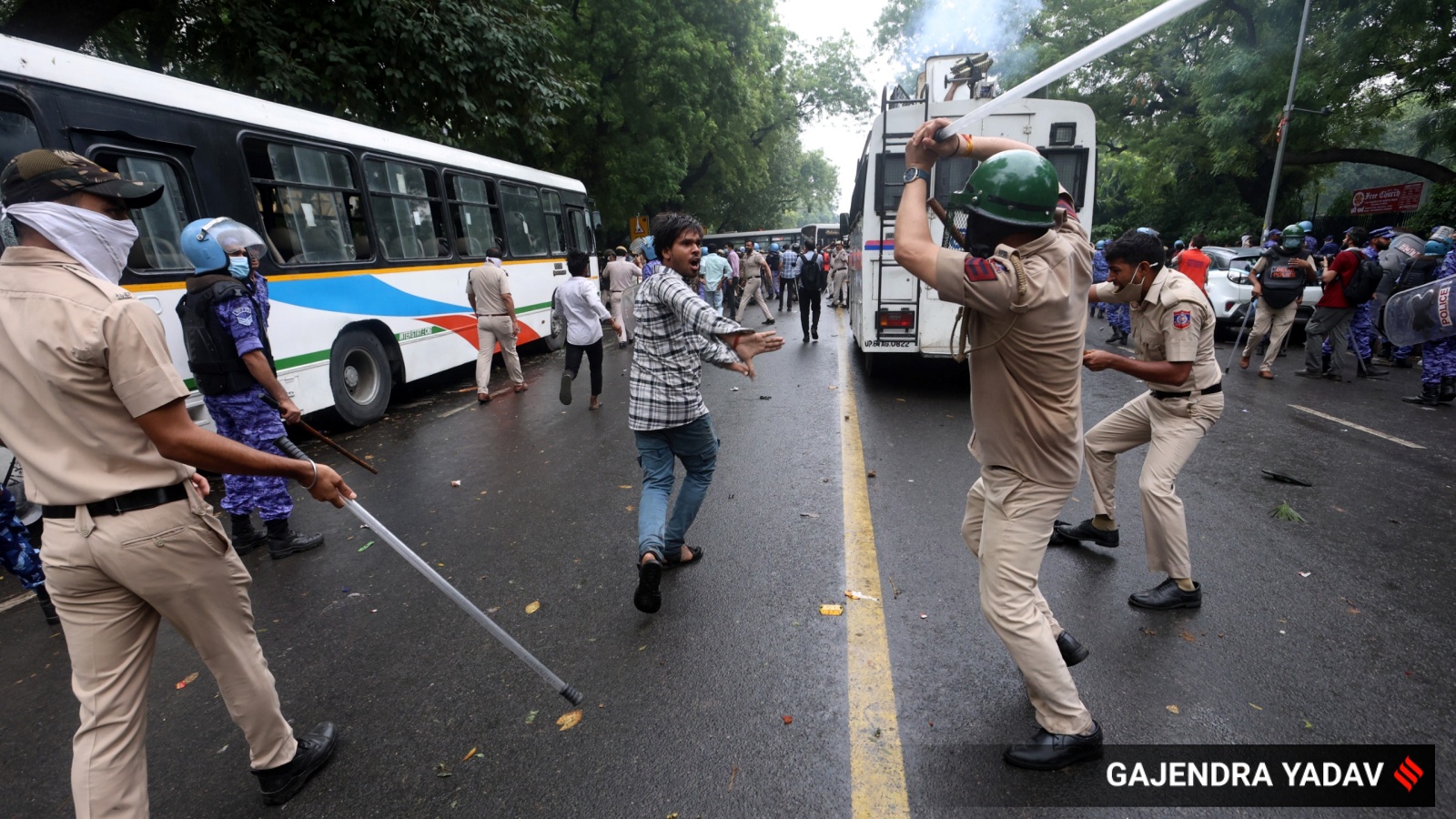
What happened: Supreme Court interim directions after student protests
The Supreme Court indicated it may form a high-powered team to conduct a thorough, fair, and independent inquiry into allegations that police used excessive force during recent student protests in Delhi and other States. The Court allowed authorities to continue investigating FIRs already registered relating to the protests, but the Court also issued interim protections for students arrested during the demonstrations.
The Supreme Court directed the immediate release of all minors arrested in connection with the demonstrations. The Court also restrained authorities from taking coercive action against protesting students unless the students have criminal antecedents. If bond or surety was insisted upon, the Court provided for release by a simple bond executed by the minor or by the minor’s family.
The Supreme Court directed preservation of evidence tied to the protests. The Court specifically mentioned evidence categories such as CCTV footage, drone recordings, body-worn camera footage, wireless communication records, and PCR call records.
Background and earlier position: concerns about FIR continuity and assurances
The interim order allowing continuation of investigations in FIRs registered in connection with the protests triggered concerns from protest organizers. Organizers argued that the interim approach conflicted with an earlier assurance from the Union that no punitive action would be taken against protesters.