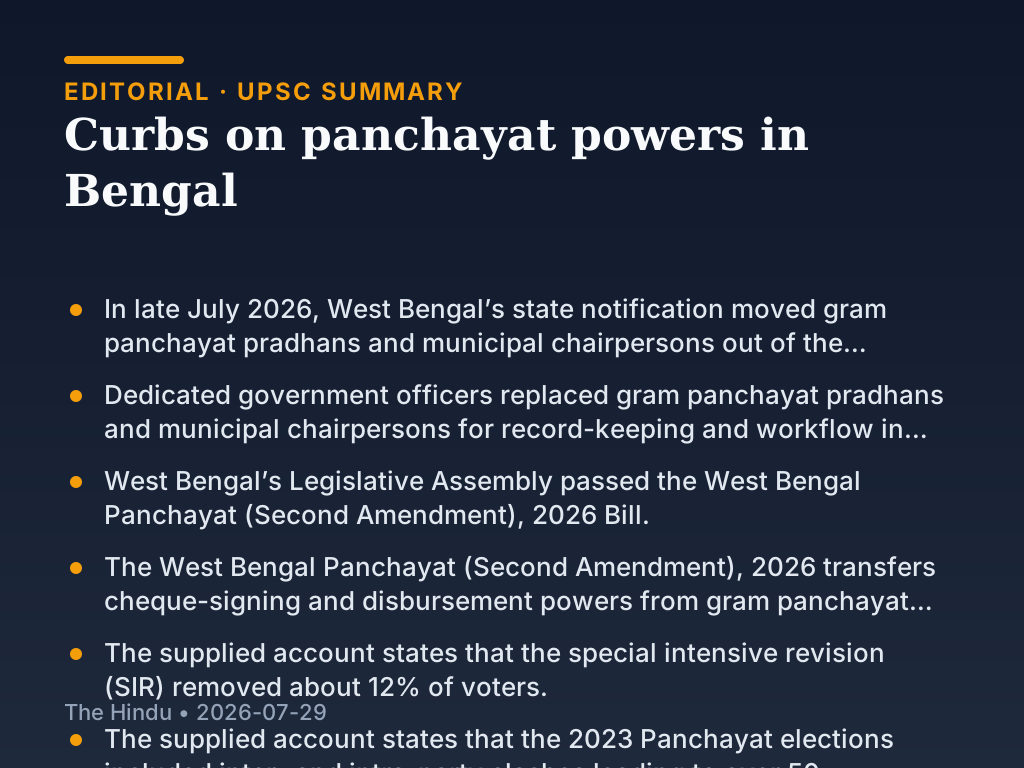
West Bengal’s Suvendu Adhikari government restricted elected local leaders’ roles by shifting birth-and-death registration responsibilities and transferring certain financial discharge powers at gram panchayat level to government officers.
In late July 2026, West Bengal issued a notification removing gram panchayat pradhans and municipal chairpersons from the registrar role for birth and death registrations. Dedicated government officers were assigned record-keeping and workflow responsibilities.
West Bengal’s Legislative Assembly passed the West Bengal Panchayat (Second Amendment), 2026, which moved financial discharge powers—such as cheque-signing and disbursement—from gram panchayat pradhans to panchayat secretaries, executive assistants, and block development officers.
Background and earlier position (what local governance looked like)
West Bengal’s Panchayati Raj system followed a three-tier local structure. Gram panchayat pradhans historically had major influence over welfare delivery because elected local leaders played a strong role in local resource use.
The supplied account connects local resource influence with corruption and violence concerns. The account cites violence in Panchayat elections, including the 2023 Panchayat elections, where inter- and intra-party clashes led to more than 50 deaths.
Related current affairs
- Elected rural and municipal representatives in Bengal now barred from issuing certificates
- Report: Status of Devolution to Panchayats in States—An Indicative Evidence-Based Ranking, 2024; Devolution Index up from 39.9% to 43.9% (2013-14 to 2021-22)
- BJP accuses Karnataka government of ‘double standard’ over Adani Group
- State clears Bill to cap PF/EPF at Rs 7,000
- State clears Bill to cap private school fee hikes at 5%
- State clears Bill to cap PVL (State school fee) without? (captioned as “cap pvt school fees hike at 5%”)