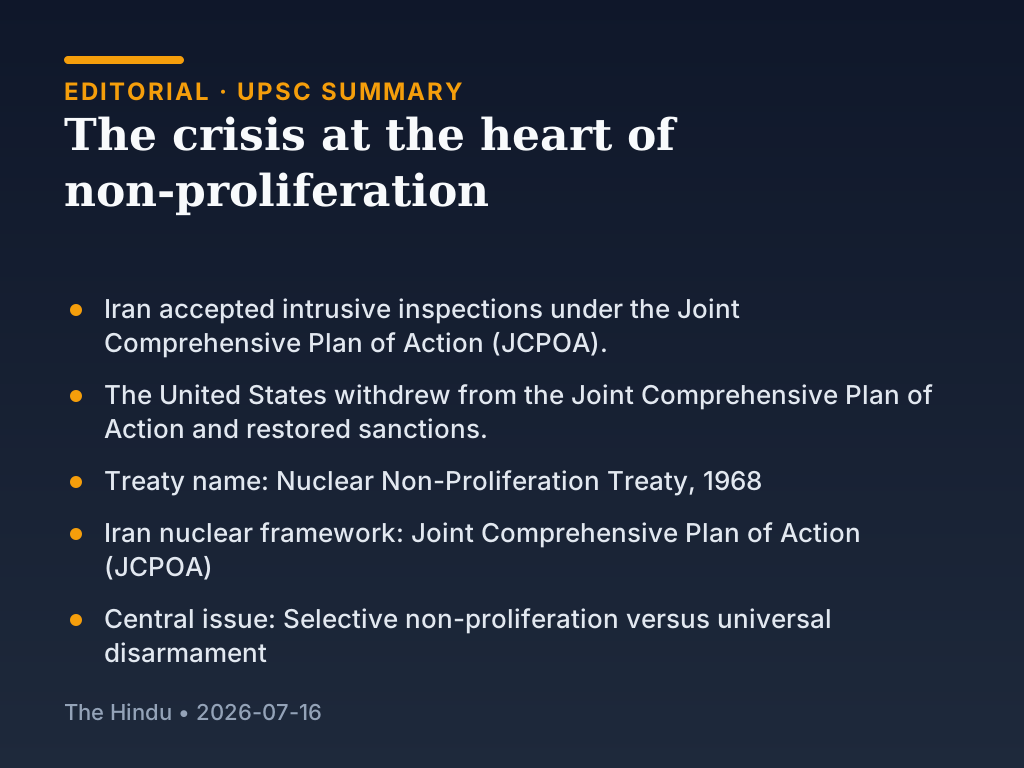
The Iran nuclear dispute has revived criticism of the global non-proliferation regime. The Nuclear Non-Proliferation Treaty, 1968 creates unequal obligations between nuclear weapons states and non-nuclear weapons states, and selective enforcement weakens the legitimacy of the system.
Iran was asked to give up uranium enrichment and accept strict limits while established nuclear powers retained their arsenals. The Nuclear Non-Proliferation Treaty, 1968 is portrayed as a hierarchy between nuclear haves and have-nots rather than a genuine disarmament compact.
Iran operated within a legal framework and accepted intrusive inspections under the Joint Comprehensive Plan of Action (JCPOA), but the United States withdrew from the JCPOA and sanctions returned after the withdrawal.
Background and earlier position
The post-1945 nuclear order gave the United States the first use of nuclear weapons and later placed it among the guardians of the nuclear order. That history raises questions about the moral basis of a system that restrains some states more strictly than others.
The Nuclear Non-Proliferation Treaty, 1968 rests on three pillars: non-proliferation, disarmament, and peaceful uses of nuclear energy. The disarmament pillar has remained weak in practice.
Related current affairs
- We stand at a crossroads… (author attribution and treaty quote box)
- New sanctions sign of ‘desperation’; U.S. measures will fail, says Araghchi
- Türkiye seeks international arrest warrant for Netanyahu over alleged genocide
- World briefs: 82 killed after 7.4 magnitude earthquake; PoK elections post-off amid unrest; UN takes note
- China calls Arunachal Pradesh move ‘illegal, null and void’
- A new security triangle emerges with the Makkah Pact