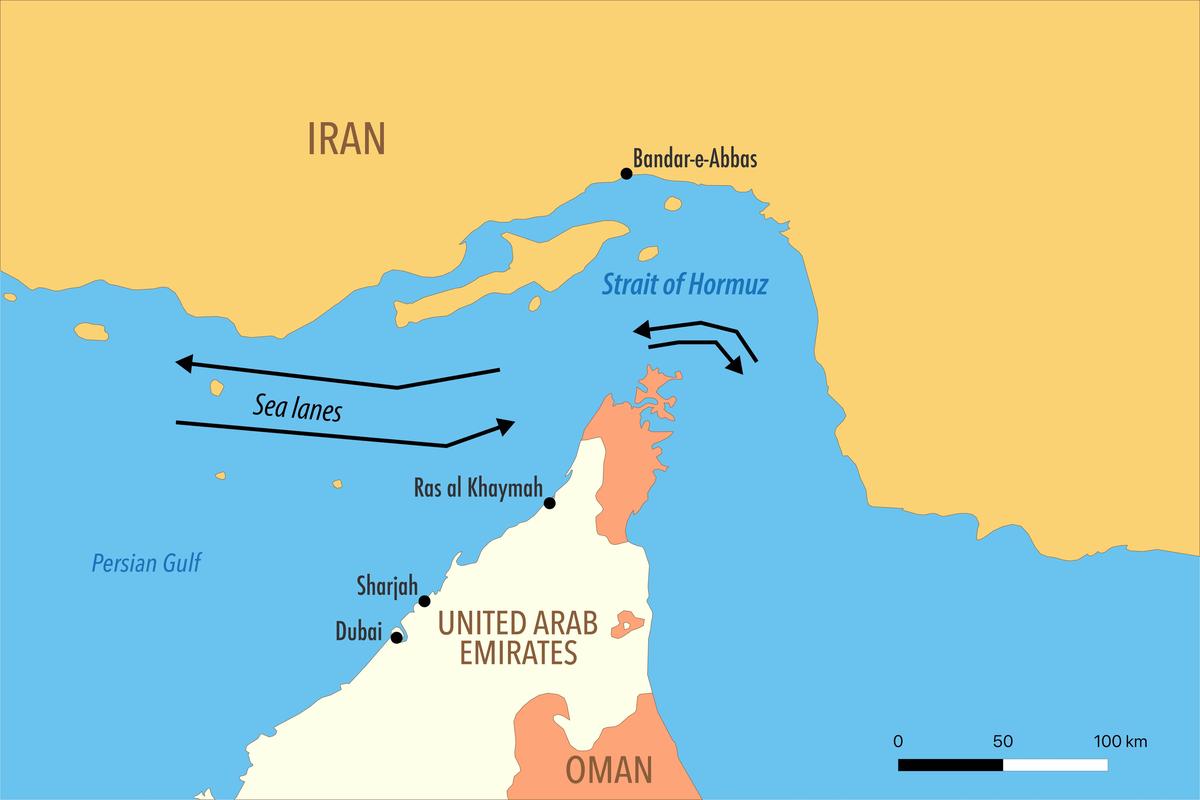
Iran’s use of disruption in the Strait of Hormuz and pressure on Gulf neighbours has implications far beyond West Asia. The core UPSC relevance lies in energy security, maritime security, and India’s diplomatic balancing in a volatile region.
Arjun Subramaniam argues that Iran’s recent actions may look tactically effective but are strategically self-defeating. He says Iran’s long-running proxy strategy has widened its isolation from the global mainstream.
What the note says
Iran has presented itself as resisting Western imperialism and supporting Palestine. The argument in the note is that Iran’s broader regional course has instead increased instability and reduced Iran’s room for economic and diplomatic reintegration.
The note links Iran’s post-1980s strategy to the cultivation of proxy forces such as Hezbollah, Hamas, and the Houthis. It describes this as a disruptive strategy that keeps the region volatile.
The note also mentions India’s preference for multilateralism and transactional engagement. It cites India’s cooperation with Iran on energy and the Chabahar Port, and says India did not act as mediator during the recent conflict while supporting a United Nations Security Council resolution condemning Iranian attacks.
Related current affairs
- Trump vows to hit a bridge or power plant in Iran for each Hormuz attack
- U.S. ‘taking over’ Strait of Hormuz, says Trump
- Allowing Iran to control Hormuz ‘dangerous precedent’, says Rubio
- Tehran using Hormuz as leverage, other nations must step up: Rubio
- Bahrain/Israel? Tebrin using Hormuz as leverage, other nations must ‘step up’: Rubio
- IRGC says two oil tankers explode after hitting mines in Hormuz