What happened: parliamentary findings on cost gaps and out-of-pocket childbirth burdens
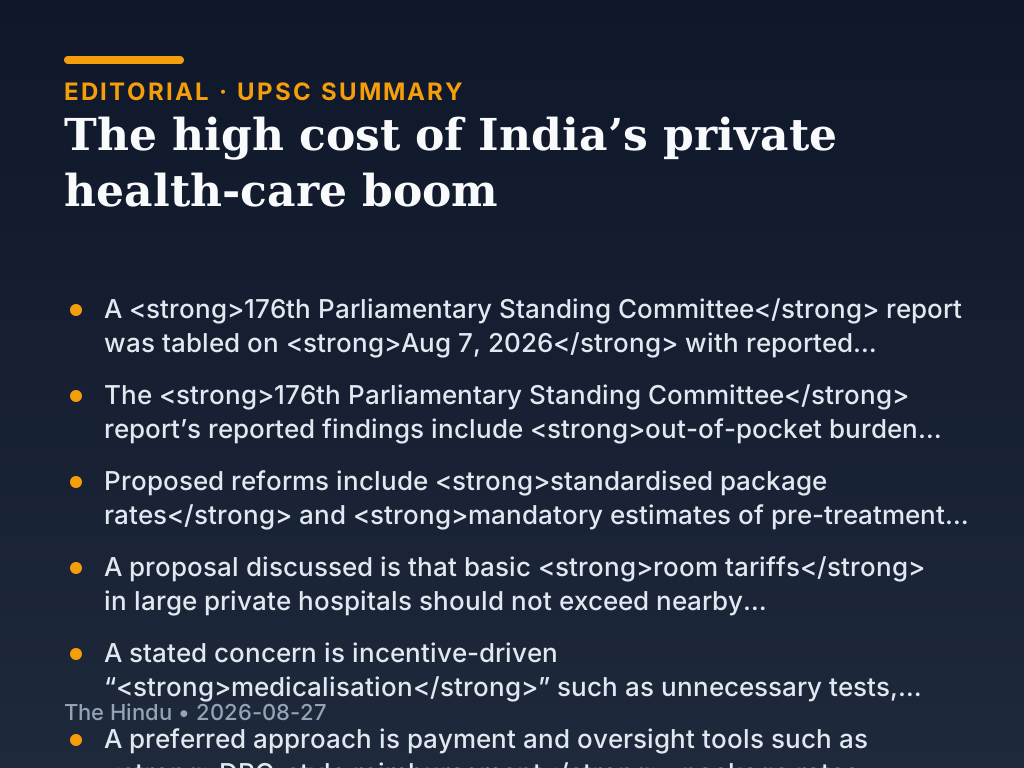
A 176th Parliamentary Standing Committee report was tabled on Aug 7, 2026. The Committee’s reported findings include sharp differences in hospitalisation costs between private and government facilities. The Committee’s reported findings also highlight out-of-pocket burdens for childbirth in private institutions.
What Chandrakant Lahariya argues: private incentives can change both price and care intensity
Physician Chandrakant Lahariya argues that health-care spending and regulation debates must explicitly consider how private-sector incentives shape clinical behaviour. The argument starts from a core constraint in health care: many patients cannot easily judge whether an MRI, an admission duration, or a procedure is medically necessary.
Because patients face information asymmetry (unequal knowledge between provider and patient), provider incentives can influence both the following outcomes:
Prices charged and paid through billing structures and pricing choices.Intensity of care through the number of tests, length of admission, and the mix of procedures.
Related current affairs
- Panel for private hospital FDI relook as it warns of rising healthcare costs
- Transparency as the foundation of trust in medicine
- HUMERUS (cartoon)
- M.P. govt. hospital faces inquiry for transporting body in garbage vehicle
- To lower cost of credit, track information as well
- Government measures to improve access to affordable medicines (Janaushadhi, AB-PMJAY, Free Drugs Service Initiative, AMRIT, Rashtriya Arogya Nidhi/Discretionary Grant)