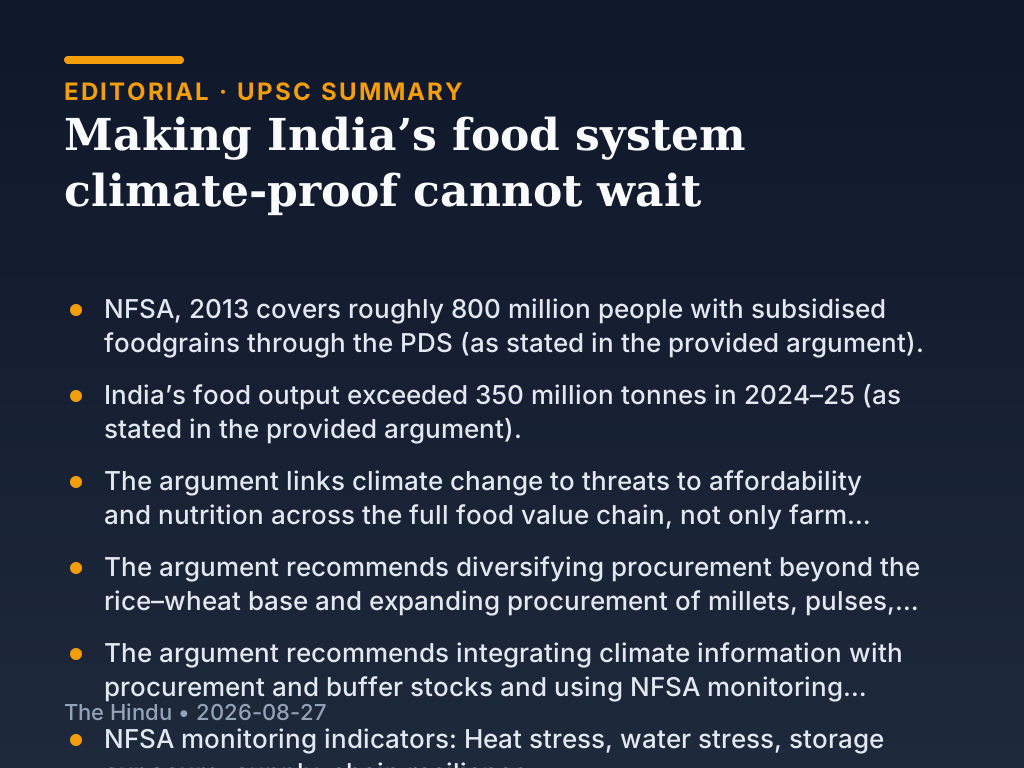
What happened: embedding climate risk management into NFSA 2013 and PDS
Elisabeth Faure (Country Director, UN World Food Programme in India) and Purvi Mehta argue that India should move from achieving food security to climate-proofing food security. Their position is that climate change can harm affordability and nutrition across the entire food value chain, including farming, storage, transport, and consumption.
Background and earlier position: India’s food security system built on production, buffers, and legal entitlement
The authors connect India’s food-security transition to earlier steps: a move away from food aid dependence in the 1960s toward domestic production and buffer stocks, and the creation of a legal entitlement for subsidised foodgrains under the National Food Security Act (NFSA), 2013.
NFSA, 2013 covers roughly 800 million people with subsidised foodgrains under the Public Distribution System (PDS). The authors also highlight current production capacity, stating that India’s output exceeded 350 million tonnes in 2024–25.
For PDS delivery, the authors point to digitisation efforts and the One Nation One Ration Card (ONORC) initiative to strengthen administrative delivery.