What happened in Bengaluru
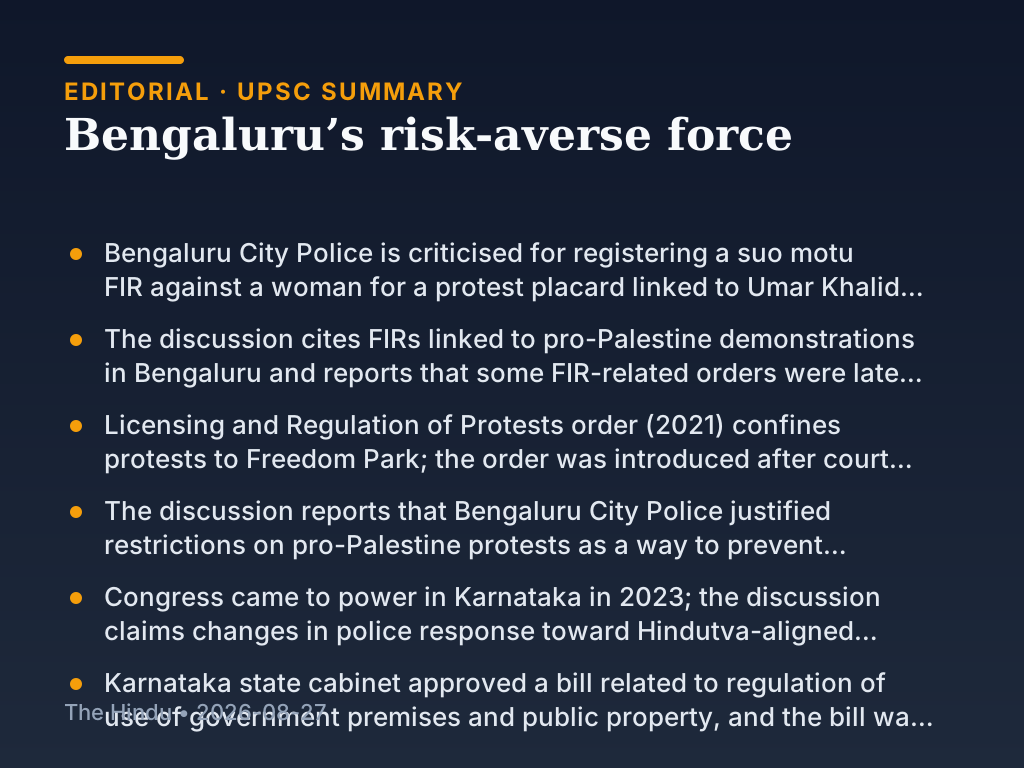
The discussion centres on actions attributed to Bengaluru City Police and related institutional actors in managing protests and dissent. The core allegation is that police behaviour is cautious in ways that restrict lawful dissent and unevenly affect demonstrators based on ideological alignments. Examples described include: Suomoto FIR registration against a woman for a placard linked to Umar Khalid and Sharjeel Imam during a student protest.Student leadership condemned actions attributed to a Congress government in the context of campus and protest management.FIRs connected to pro-Palestine demonstrations in Bengaluru; some FIR-related orders were reported as later quashed.Police disruptions of indoor discussions connected to pro-Palestine mobilisation, including a practice described as keeping police in the loop even when legal permission was not needed for indoor meetings.
Background and earlier position: Licensing and Regulation of Protests order (2021)
The discussion links Bengaluru’s approach to the Licensing and Regulation of Protests order (2021). The order confines protests to Freedom Park. The order was introduced after court action related to earlier protests that had caused traffic disruptions. A key concern highlighted is that confining protests to a designated venue can “ghettoise” protests—meaning it concentrates protest activity in one area and reduces public visibility across the city. The discussion contrasts police rationale with outcomes. Bengaluru City Police is reported as avoiding pro-Palestine protests to prevent escalation and tit-for-tat mobilisation by right-wing groups. The discussion also cites reported outcomes where event permissions and venue choices changed, such as stand-up show venue shifts and cancellations during a prior BJP period, to suggest political pressure can influence policing and permissions.
What changed now: Karnataka Congress government actions and regulation of government premises
The discussion argues that responses in Karnataka stayed slow even after Congress came to power in 2023, especially toward Hindutva-aligned agendas. The claim presented is that fear of indirectly benefiting the BJP slowed effective challenge to such agendas. A specific policy update is mentioned: Karnataka’s state cabinet approved a bill related to regulation of use of government premises and public property, and the bill was reported as not tabled in the just-concluded legislature session. The discussion also states that Congress had not repealed certain “communal laws” it had promised to roll back.