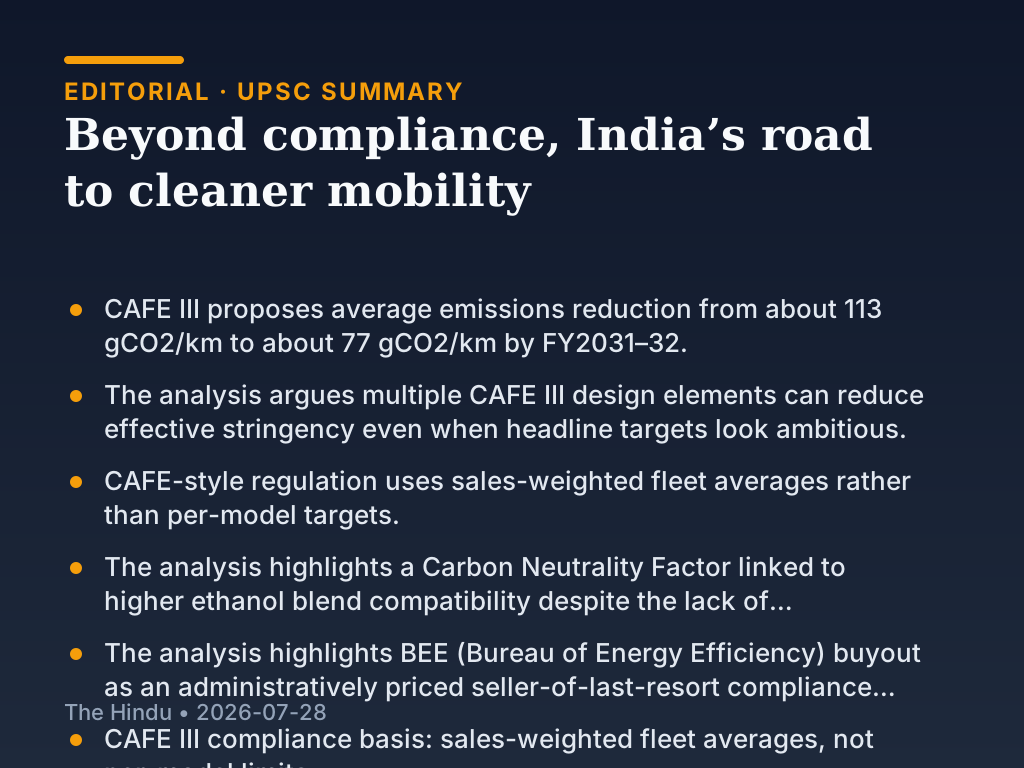
What happened: CAFE III headline targets vs effective stringency
A policy analysis argues that India’s Corporate Average Fuel Efficiency (CAFE) III norms could deliver lower-than-expected transport decarbonisation because several design features reduce the effective stringency of the rules. The analysis also links fuel-efficiency regulation choices with long-run energy security concerns, because India is vulnerable to imported oil.
Background and earlier position: how CAFE-type regulation works
CAFE-style regulation uses sales-weighted fleet averages instead of forcing each vehicle model to meet a per-model limit. Sales-weighted fleet averaging can push manufacturers toward a portfolio mix with smaller and more efficient vehicles, because overall average performance matters rather than each single model’s performance.
Over time, similar frameworks in other jurisdictions moved towards greenhouse-gas emission goals, which encouraged innovation in cleaner powertrains such as hybrids and electric vehicles (EVs). The policy analysis contrasts this with approaches where emissions rules are combined with technology-based credits, creating stronger incentives for rapid electrification.