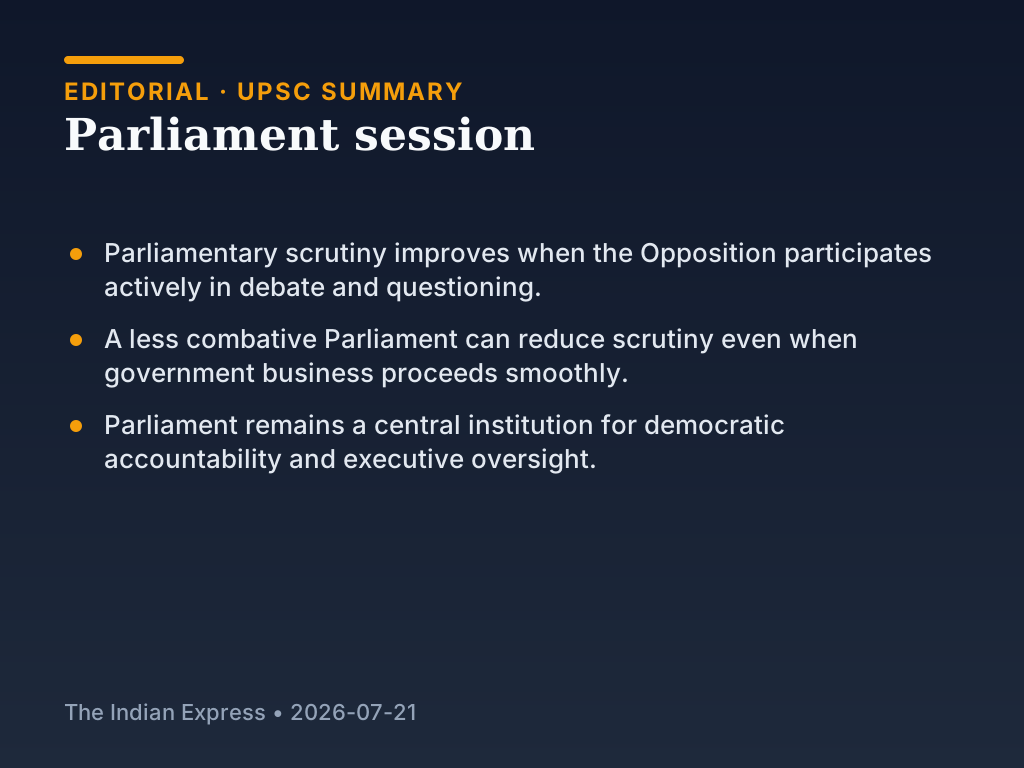
A reader’s opinion argues that Parliament’s opening session highlighted a basic democratic principle: parliamentary accountability depends on active debate and scrutiny. The reader says the Opposition’s absence weakened examination of government business and allowed a less combative atmosphere in proceedings.
The core concern is institutional, not partisan. Parliament is meant to test executive action through questioning, debate, and disagreement, and the reader links the quality of those proceedings to the health of representative democracy.
The opinion also suggests that a reduced level of confrontation can benefit the government in the short term, but it can also lower scrutiny of legislation and executive decisions. The broader exam takeaway is that an effective Parliament needs participation from both the Treasury side and the Opposition side to function as an accountability forum.
Why this matters for UPSC
The issue maps directly to GS2 because it concerns the functioning of Parliament, democratic accountability, and the role of the Opposition in oversight. It is useful for essays and mains answers on legislative effectiveness, quality of debate, and institutional checks and balances.
Related current affairs
- Parliament fails to function on second day of Monsoon Session
- RS passes judges Bill; Oppraises Finance route, drive as opposition over bill continues
- Rahul seeks Shah’s ouster, vows justice for students
- Opposition parties demand scrutiny: ‘till further orders’ context
- Lok Sabha disrupted for third straight day
- Amid Opp–Govt tussle, Lok Sabha disrupted for fourth straight day