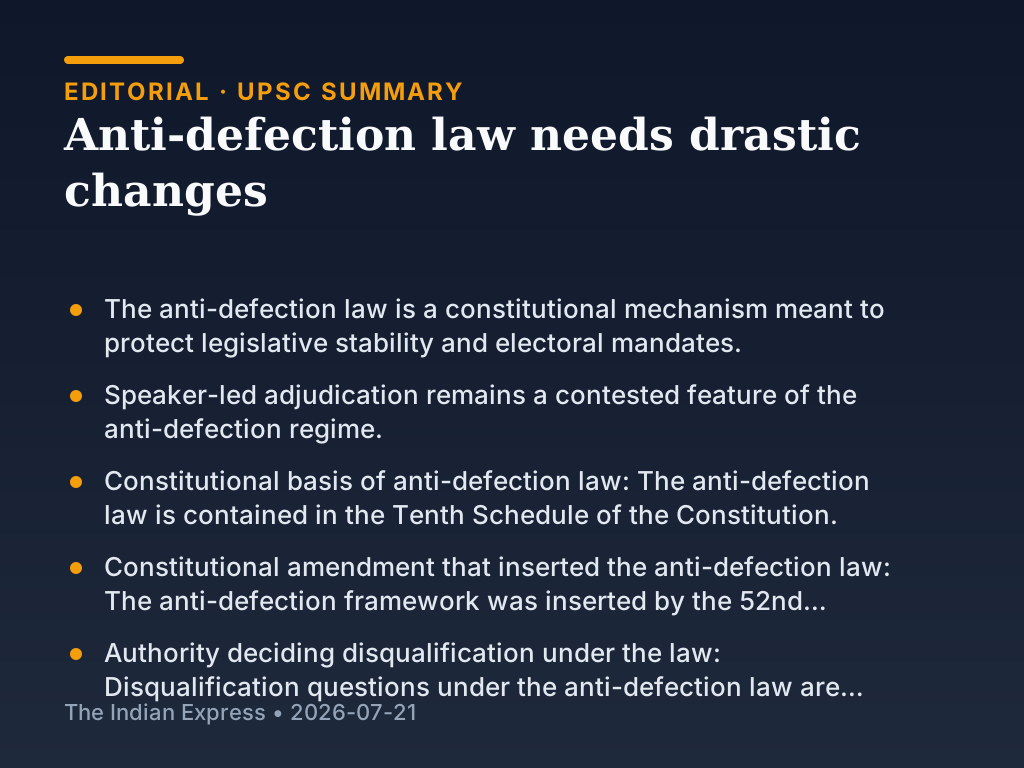
The Indian Express editorial argues that India’s anti-defection framework is failing to preserve legislative stability and deter opportunistic switching. The core concern is constitutional: the Tenth Schedule should protect the mandate of voters, but repeated instances of political realignment have exposed loopholes and weak enforcement.
The Tenth Schedule was inserted into the Constitution by the 52nd Constitutional Amendment Act, 1985. It was meant to curb political defections that had weakened governments and distorted electoral mandates.
Background and earlier position
Under the existing framework, disqualification questions are decided by the Speaker or Chairman of the House. That design has remained controversial because adjudication can become slow, politically influenced, or strategically delayed.
What changed now
The current editorial debate is not about the existence of the anti-defection law, but about its effectiveness. The Indian Express argues that the present framework has created incentives that lawmakers can exploit, so reform should focus on the structure of deterrence, the definition of defection, and the speed and credibility of adjudication.
Related current affairs
- SC seeks Centre’s reply on Sibal plea over Tenth Schedule interpretation
- SC seeks Centre’s reply on plea over anti-defection law ‘merger’ exception
- SC to hear Goa Congress leader’s petition against defection of MLAs to BJP
- SC to hear Goa Cong. leader’s plea against defection
- AIADMK submits clarifications on anti-defection plea
- Will have to see if there was split in Shiv Sena: SC