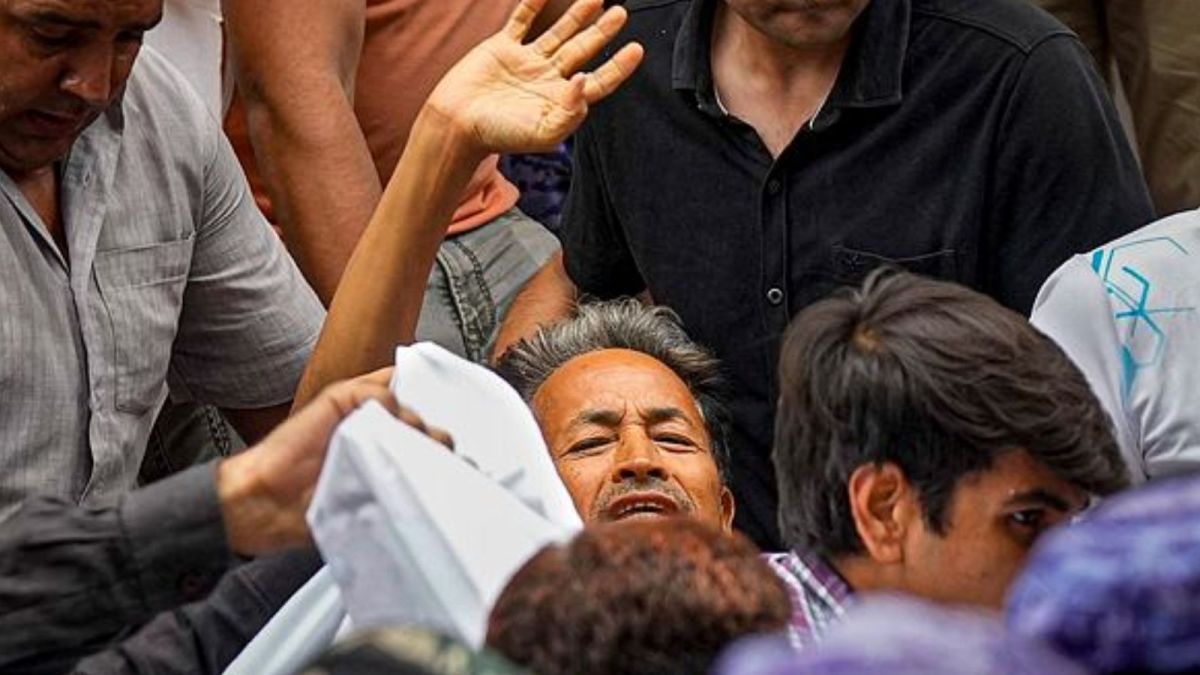
At Jantar Mantar in New Delhi, the hunger strike led by activist Sonam Wangchuk became a wider protest over the demand for Union Education Minister Dharmendra Pradhan’s resignation. The episode matters for UPSC because it combines public order management, right to protest, and medical ethics in a politically sensitive location near Parliament.
What happened
The protesters said Wangchuk’s removal did not weaken the agitation and that the protest would continue until the minister resigned. The protest was called by the Cockroach Janta Party (CJP) and centred on the resignation demand against Union Education Minister Dharmendra Pradhan.
At least 21 protesters continued an indefinite hunger strike even after Sonam Wangchuk was taken to hospital after 21 days of fasting. The site reportedly had a volunteer medical counter, lozenges, oral rehydration salts, makeshift tents, and protest boards showing names and fasting days.
Background and earlier position
The protesters said Delhi Police had earlier allowed the CJP protest at Jantar Mantar to continue after assessing it as more of an online mobilisation. The agitation began on 20 June, and the police later permitted extensions beyond the initial one-day format.
Related current affairs
- Police move Wangchuk to hospital on Day 21 of fast
- 21 protesters continue hunger strike
- Hunger strike at Jantar Mantar medical bulletin: Wangchuk refuses medical help
- Sonam Wangchuk to be discharged from hospital today; will visit Rajghat
- Protesters at Jantar Mantar, in front of police/medical action: ‘Wangchuk refusing medical help’ (Safdarjung bulletin)
- Hunger strike day 21: Police shift Wangchuk to hospital