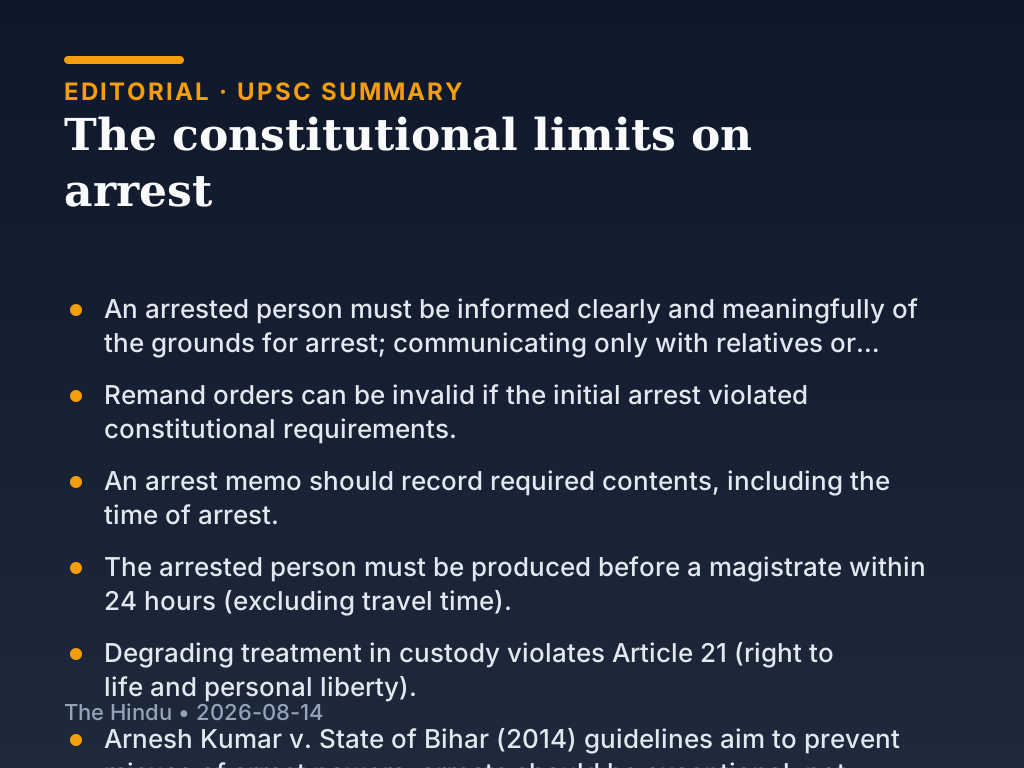
Supreme Court arrest safeguards require meaningful communication of arrest grounds, proper arrest memo documentation, and production before a magistrate within 24 hours (excluding travel time).
GS2The HinduGS2Article 22 safeguardsArrest vs detentionArticle 21 dignity in custody
What happened: constitutional arrest safeguards and consequences for unlawful arrest
Supreme Court constitutional jurisprudence is used to set limits on arrests and police custody. The key practical emphasis is on what the arrested person must be told, what must be recorded in the arrest memo, and how quickly judicial oversight must begin.
The framework requires that an arrested person be informed clearly and meaningfully of the grounds for arrest. It also states that remand orders can be invalid when the initial arrest was unconstitutional.
The framework highlights operational compliance points during custody and remand:
It specifies that arrest memo documentation must include required contents, including the time of arrest. It reiterates that the arrested person must be produced before a magistrate within 24 hours (excluding travel time). It also treats degrading treatment in custody as a violation of Article 21 (right to life and personal liberty), requiring procedural amendments to prevent repeat violations.
Background and earlier position: arrest vs detention; ‘exceptional not routine’ arrests