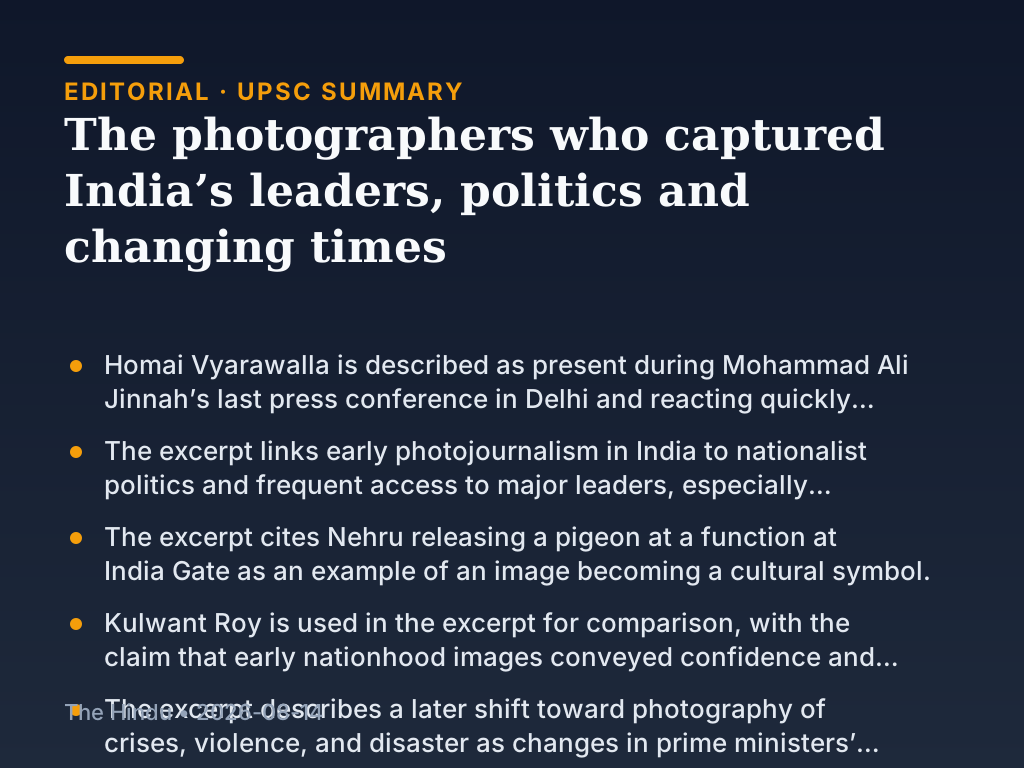
What happened: photojournalists built political public memory through iconic images
Indian photojournalists helped create a visual archive of political leaders and the nation’s political evolution by capturing moments that later audiences recognized as symbols of an era. The excerpt highlights how specific photographs gained endurance because the historical moment, the photographer’s access, and the image’s later cultural status interacted.
A central early example is Homai Vyarawalla, a pioneering Indian photojournalist. Her presence during Mohammad Ali Jinnah’s last press conference in Delhi is described as a test of composure: she continued photographing and reacted quickly after a fall while shooting. The excerpt uses this episode to show the practical skill and calm needed to capture political events under pressure.
The excerpt also points to how leaders became recurring photographic subjects. It argues that photographers of that era often saw their work as tied to the nationalist project and were closely connected—through repeated access—to major leaders, especially Jawaharlal Nehru and Mahatma Gandhi.
The excerpt describes how some leader-centered images became cultural symbols. One example mentioned is Nehru releasing a pigeon at a function at India Gate, presented as a moment that audiences later recognized as more than an event: it became part of how public memory understood Nehru and the mood of the nation at that time.
Background and earlier position: early nationhood photography favoured ceremonial politics and confident narratives
Related current affairs
- FROM THE ARCHIVES: Homai Vyarawalla and early photojournalism around Jinnah and Nehru
- Leave devotion out of politics (From the Archives): The Rashtrapati (signed 'Chanakya')
- The Hindu brings back historic 1947 Independence Day edition
- Sonam Wangchuk to be discharged from hospital today; will visit Rajghat