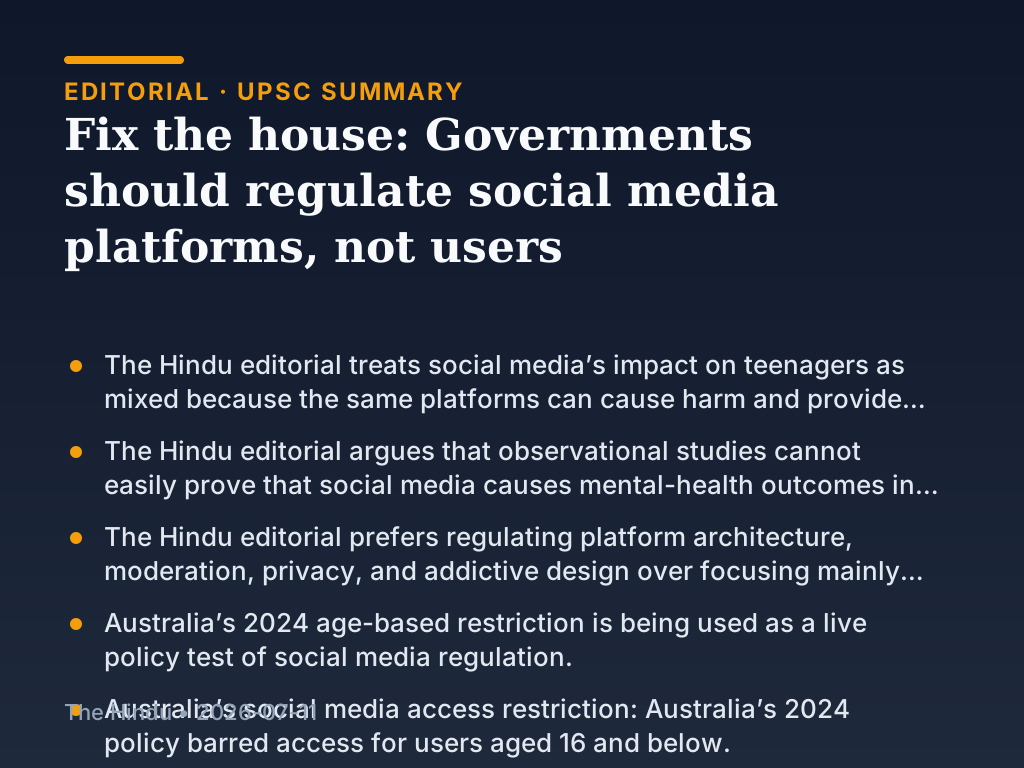
The Hindu editorial argues that governments should regulate social media platforms, not just users. The central policy debate is whether age-based access bans can reduce adolescent harm, or whether governments must instead impose stronger duties of care on platform design, moderation, and privacy protections.
Teenage social media use is associated with poorer mental-health outcomes, especially for girls. The same platforms can also cause disrupted sleep, cyberbullying, and exposure to self-harm and eating-disorder content.
Social media can also have benefits. These include maintaining friendships, identity exploration, peer support, access to LGBTQIA+ communities, and access to mental-health information. The overall effect of social media is therefore mixed rather than uniformly harmful.
Observational studies do not establish causation cleanly. The effect may depend on whether engagement is passive or active, whether the online community is supportive or hostile, and how other interactions shape the experience.
Governments should adopt a stronger duty of care for social media companies. Public policy should act on platform design and platform obligations instead of waiting for perfect evidence on age-based user bans.
Related current affairs
- Meta trial biggest test yet of youth social media litigation
- Meta reaches $17-bn settlement with U.S. in trial over social media addiction
- AI-assisted learning (letter to the editor)
- ‘The story so far’ teaser boxes for multiple FAQs (OpenAI launch; U.S. transshipment; Trump election comments)
- What does ChatGPT for Teens entail?
- Children’s social media curbs a policy matter: HC