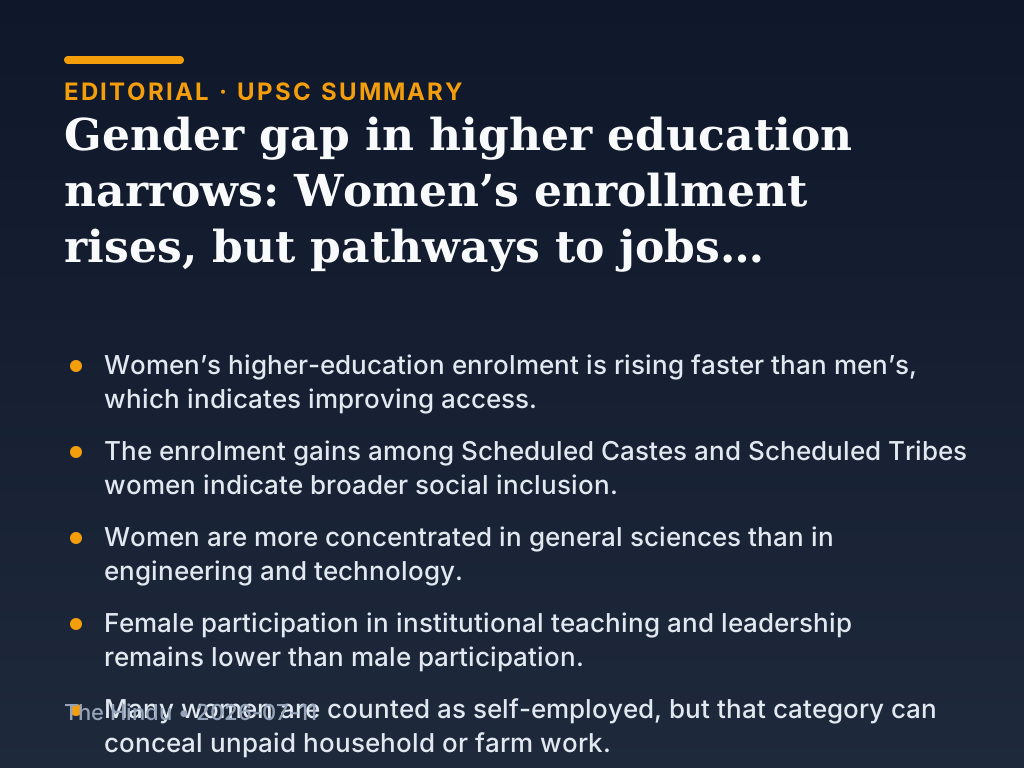
AISHE 2023–24 data show a clear rise in women’s participation in higher education, with female enrolment growing faster than male enrolment over the last decade. The current data trend matters because India has improved access, but the conversion of education into equitable employment remains incomplete.
The core concern is the broken pipeline from college to paid work. Women may be entering campuses in greater numbers, but many still face barriers in securing jobs aligned with their qualifications, especially because of gendered stream choices, weak institutional representation, and labour-market constraints.
What the data point to
The data point to three linked patterns: women’s share of total higher-education enrolment is now close to half; gender parity in enrolment is slightly above one; and enrolment gains have also improved for Scheduled Castes and Scheduled Tribes women. These shifts indicate widening access and stronger social inclusion.
The data also show strong gender stratification within higher education. Women are more represented in general sciences, but they remain underrepresented in engineering and technology. Inside institutions, women are also fewer among teachers and are less visible in top leadership positions.
Why employment outcomes lag behind education gains
Related current affairs
- For the first time, UG enrolments decline in India
- AISHE Reports Released for 2022-23 and 2023-24 by Ministry of Education
- Vacant seats (letter to the editor)
- Research capital: ‘Taxing frivolous industries will not find success’ — Indian academia to face change
- Indian academia’s ‘research capital’ call: ‘Tāying (Taxis?) will suffice / Tang aviation?’ (headline partially legible)
- Vice President C. P. Radhakrishnan graces SASTRA Deemed University’s Ruby and Silver Jubilee valedictory celebrations; launches six new schemes