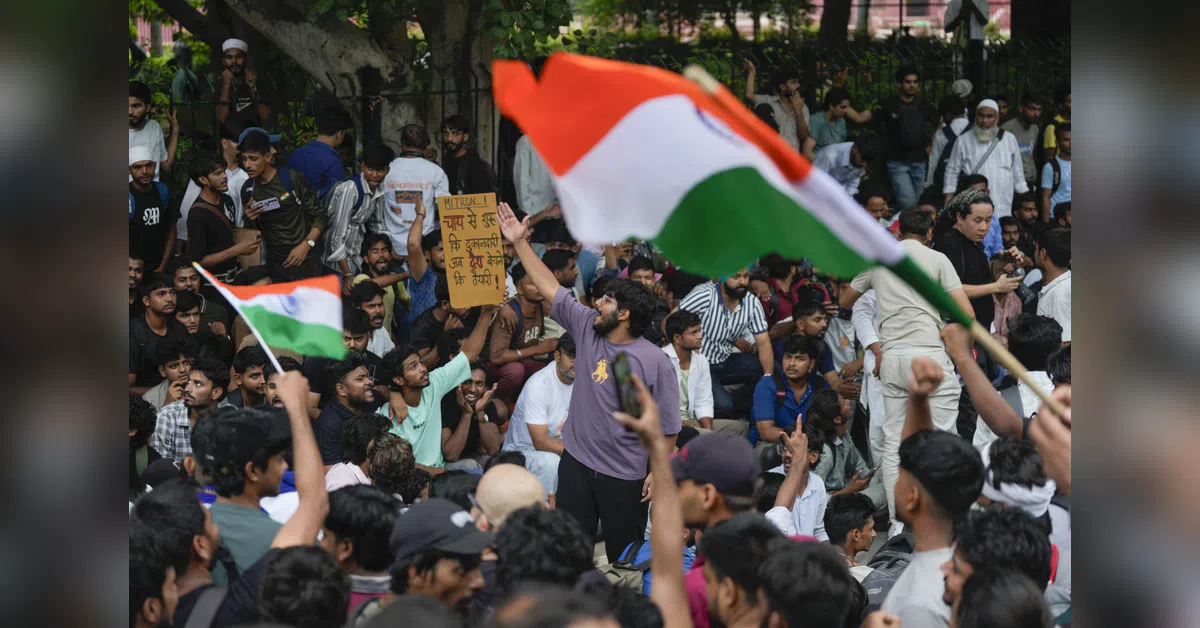
Jantar Mantar in Delhi has re-emerged as a visible stage for protest and civic pressure. The renewed use of the site matters because it places freedom of speech and expression and public order in the same frame.
The site is being described as a protest venue under the shadow of the Chief Justice of India (CJI). The setting links public gathering space to anger, violence, and political dissent, showing how a location can acquire strong symbolic value in a democracy.
Background and earlier position
Jantar Mantar has long been associated with peaceful protest in the national capital. In recent years, the use of the area for demonstrations has also been shaped by administrative restrictions and concerns about congestion, security, and public inconvenience in central Delhi.
What happened now
The feature reports gatherings near barriers and at the protest site, with on-the-ground accounts and photographs showing the return of visible demonstrations. The renewed use of Jantar Mantar is also linked to a broader climate of legal and administrative responses to dissent.
Related current affairs
- At CJP’s resurrected Jantar Mantar stage, the protests of violence and defiance continue
- At CPI’s resurrected Jantar Mantar stage, the chants of violence and defiance
- At CJP’s resurrected Jantar Mantar stage, the scars of violence and defiant slogans
- In Brief: Why should Jantar Mantar be used as protest site, asks HC
- INBRIEF: Delhi High Court questions using Jantar Mantar for protests
- From Jantar Mantar to near Parliament: CJP protest march that took on a life of its own