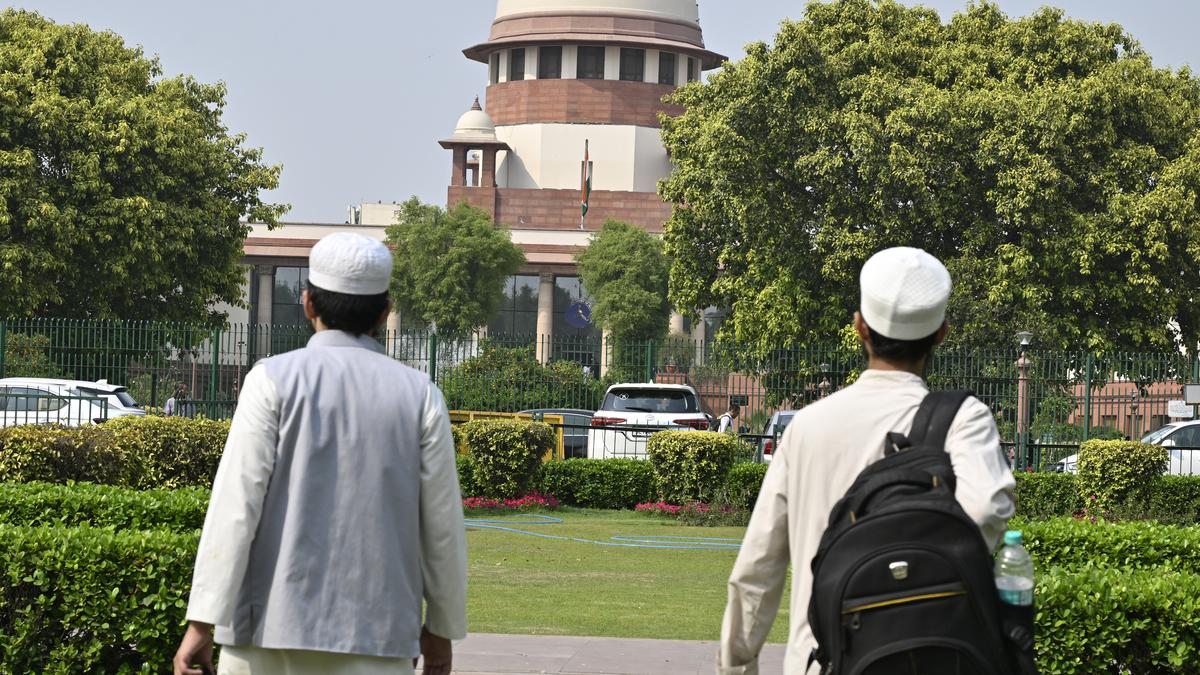
What happened
The Supreme Court of India has temporarily allowed the Kerala Waqf Board to continue functioning under a limited arrangement, while dropping a condition that required government oversight. The bench considered the oversight requirement unnecessary and chose a narrower approach that preserves administrative continuity while the legality of the restrictions remains under judicial scrutiny.
The legal significance lies in the balance between regulation and autonomy. The case concerns the governance of waqf institutions and the extent to which the executive can supervise religious endowments without becoming directly controlling.
Why the issue matters for UPSC
The dispute maps directly to the GS2 syllabus on the judiciary, governance, and the regulation of religious institutions in a secular constitutional framework. It also connects to repeated UPSC themes such as judicial review, institutional autonomy, and the State's role in managing public or religious trusts.
Related current affairs
- SC frees Kerala Waqf Board from State govt. supervision
- CJI-led Bench lauds scrapped MGNREGA as a ‘good scheme’
- SC seeks Centre’s reply on AI use in public welfare
- After a brief pause, U.S. and Iran resume strikes
- Abhishek’s office demolished for violations; TMC plans to move HC
- SC allows release of animated film on Lord Ganesha after stay