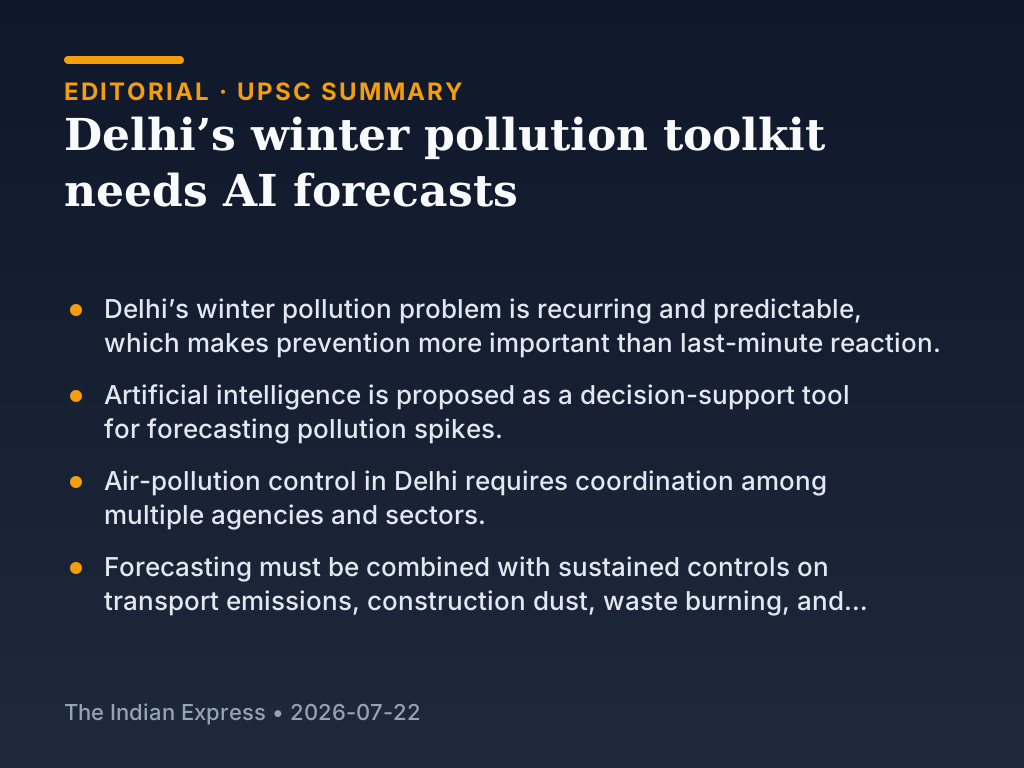
Delhi’s winter air-pollution problem is a predictable governance challenge, not only an emergency that appears after air quality collapses. Delhi’s response remains too seasonal, reactive, and fragmented, even though monitoring and forecasting systems already exist.
The central argument is that Delhi needs a proactive, technology-enabled pollution-management framework. Artificial intelligence and more advanced forecasting tools can help authorities identify likely pollution spikes earlier, time interventions better, and communicate risks more clearly to the public.
Forecasting alone cannot solve Delhi’s air-pollution crisis. Transport emissions, construction dust, waste burning, and regional pollution sources still require sustained policy action and coordination among agencies.
Why the issue matters for UPSC
The topic sits at the intersection of environmental governance, urban administration, and science-and-technology applications in public policy. It is useful for GS3 because it raises questions of prevention versus reaction, and for GS2 because it depends on inter-agency coordination and public communication.
What happened now
Related current affairs
- Jitin Prasada holds bilateral meetings in Morocco on trade, investment and digital transformation
- In Telangana, it takes a village to save a beloved tree
- What changes when AI moves from reading viral genomes to designing them?
- Indonesian police arrest 72 people suspected of starting forest fires
- RHINO HABITAT: SC panel slams Assam govt. for inaction on mining
- Noise annoys: enforce high-decibel noise rules uniformly and proactively