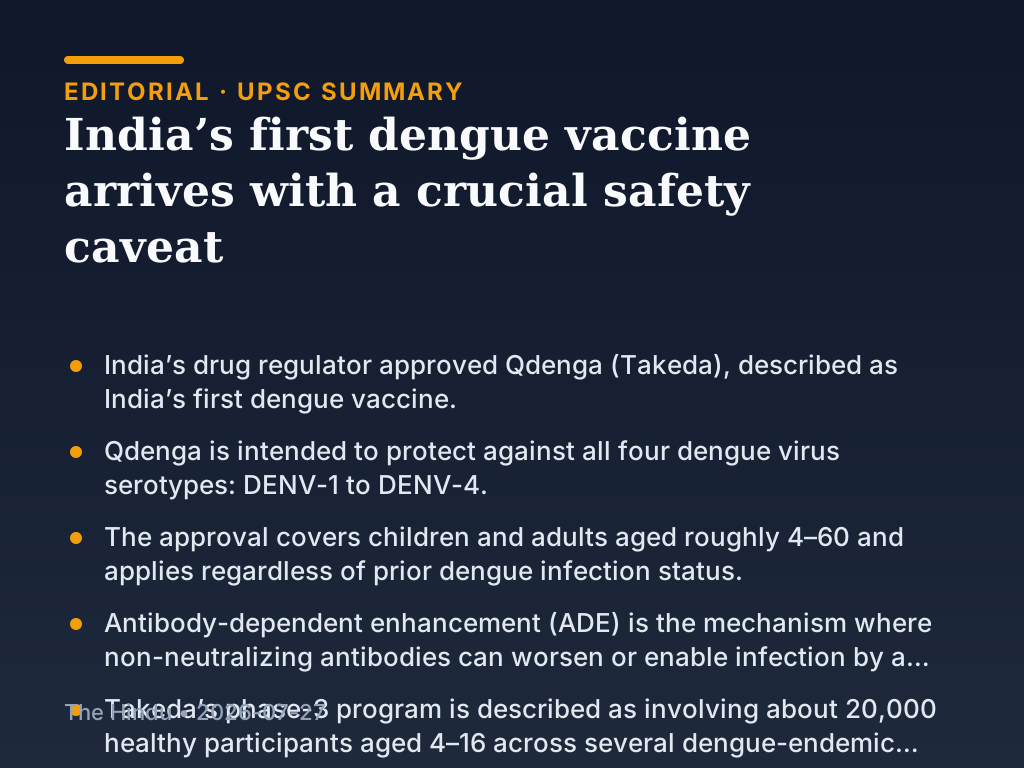
What happened: India approves the first dengue vaccine, Qdenga, with a safety caveat
India’s drug regulator approved Qdenga (by Takeda), described as India’s first dengue vaccine. The vaccine is intended to protect against all four dengue virus serotypes: DENV-1, DENV-2, DENV-3 and DENV-4.
The approval allows use for both children and adults aged roughly 4–60, and for people regardless of whether they have had dengue infection earlier.
An analysis highlights a central safety caveat based on trial subgroup patterns. The analysis argues that manufacturer trial publications show a DENV-3 signal, especially among people who were seronegative at baseline (meaning no prior dengue antibodies were detected).
Background and earlier position: why dengue vaccines must manage antibody-dependent enhancement risk
Dengue immunology matters for vaccine safety and effectiveness. After infection with one dengue serotype, the immune system typically develops antibodies that mainly target that serotype.