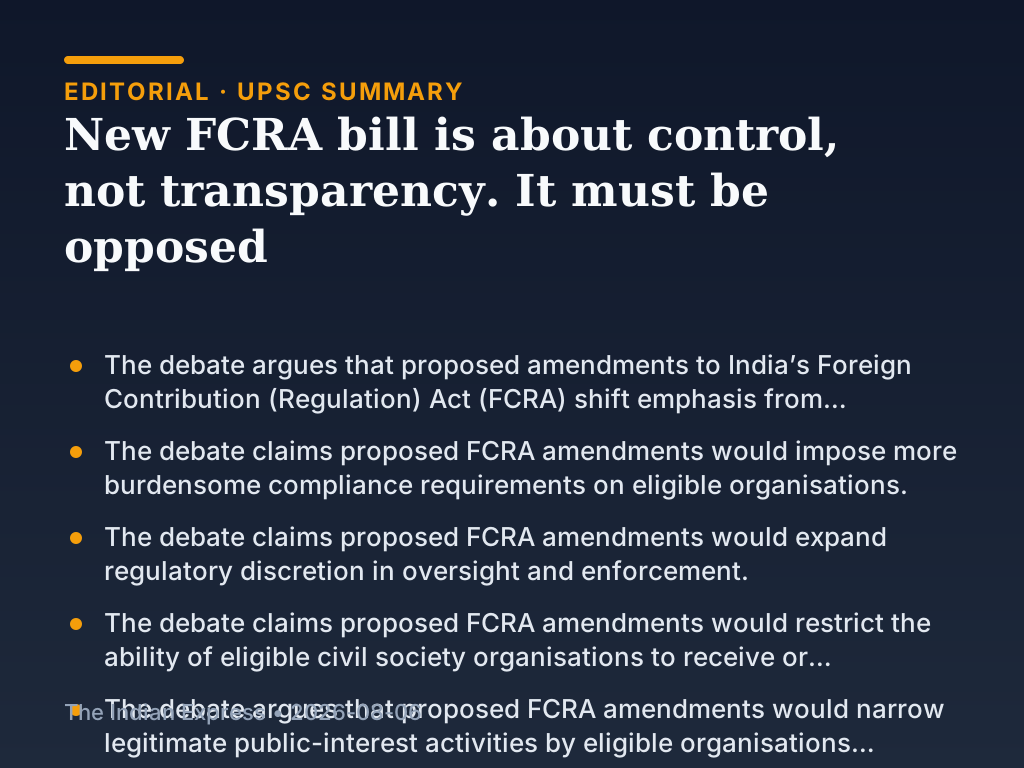
Proposed amendments to India’s Foreign Contribution (Regulation) Act (FCRA) are being debated as a shift in regulatory emphasis affecting foreign funding to civil society organisations. The controversy focuses on whether the amendments strengthen accountability through more transparent oversight or instead broaden compliance requirements and discretionary control in a way that narrows the space for legitimate public-interest work.
What happened: debated direction of change under the proposed FCRA amendments
The debate highlighted in the Indian Express opinion argues that the proposed amendments change the practical balance between transparency and regulatory control for foreign contributions. The argument emphasises potential consequences for eligible organisations, including heavier compliance obligations, broader discretion for regulators, and reduced ability to receive or use foreign funds for public-interest activity.
Background and earlier position: why FCRA regulation affects civil society funding
FCRA is India’s legal framework governing the receipt and use of foreign contribution by eligible entities. FCRA is designed to ensure accountability over foreign funding and to address risks of misuse. At the same time, many civil society organisations depend on foreign contributions for social welfare and public-interest programmes, so the compliance design and regulator discretion under FCRA can significantly affect institutional autonomy and operational freedom.
What changed now: claimed compliance burden, regulator discretion, and limits on foreign funding
Related current affairs
- Regulating funds: A threat to civil society organisations
- Amendments to FCRA to bring more transparency: Kwatra
- Amendments to FCRA to bring more transparency: Kuwt? (journalist line)
- The FCRA Bill expands state control over NGOs
- FCRA: Foreign Contribution (Regulation) Act — framework, objectives, and 2026 amendment changes
- Foreign Contribution (Regulation) Act (FCRA): overview and objectives