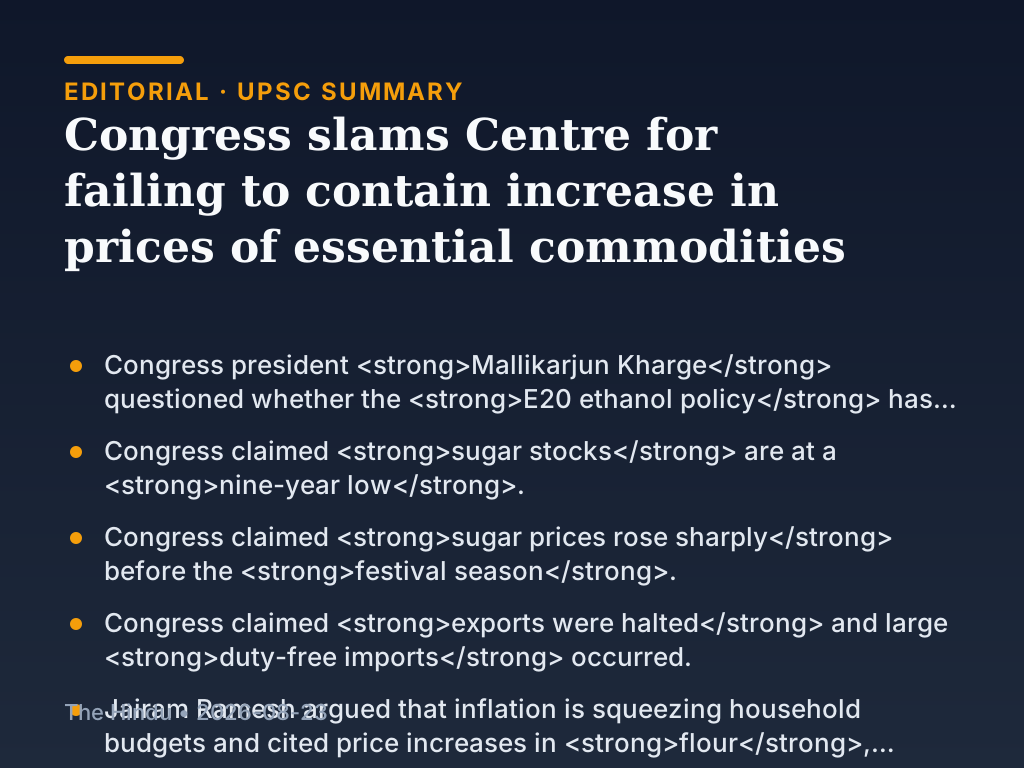
What happened: Congress targets the Centre over essential-commodity price rise
Congress leaders accused the Narendra Modi government of failing to contain inflation in essential commodities. Congress president Mallikarjun Kharge questioned whether the E20 ethanol policy—ethanol blending with fuel containing 20% ethanol—has contributed to higher sugar prices by diverting sugarcane and grain toward ethanol-related use.
Kharge also linked sugar price movements to sugar supply conditions and trade actions. Congress claimed that sugar stocks were at a nine-year low, while sugar prices rose sharply before the festival season. Congress added that exports were halted and that large duty-free imports occurred.
Jairam Ramesh expanded the argument beyond sugar and said inflation is affecting household budgets broadly. Ramesh cited higher prices for staples and everyday items, including flour, rice, spices such as cumin and turmeric, and cooking oils. Ramesh warned that the public will remember the government’s handling of prices and argued that there has been no real effort to control inflation.
Background and earlier position: ethanol blending and food-price sensitivities
The E20 ethanol policy can affect food markets because ethanol blending depends on feedstocks such as sugarcane- and grain-related inputs. In practice, feedstock demand for ethanol can change how much quantity remains available for sugar production and food uses, depending on procurement, allocation, and production economics.