What happened (core argument about the Iran–Israel–Palestine link)
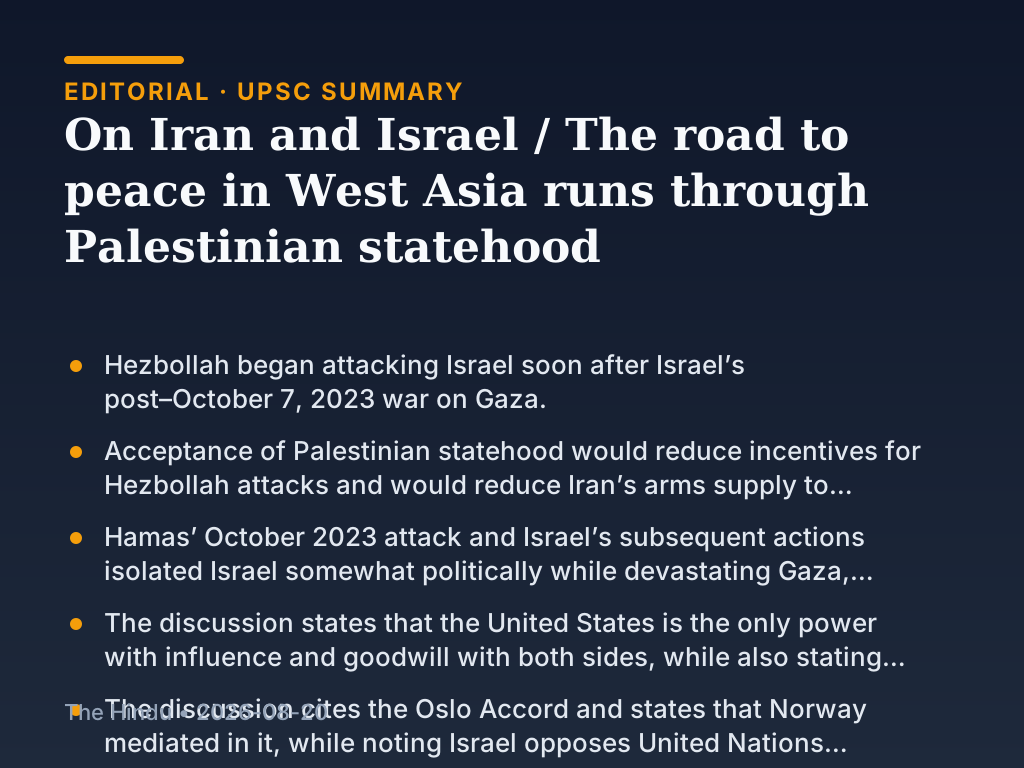
The discussion advances a security-and-diplomacy claim: regional support for attacks on Israel is linked to the status of Palestinian self-determination. The argument holds that Iran and Hezbollah treat commitment to Palestinian statehood as a major political basis, so a credible, accepted roadmap to Palestinian statehood would reduce incentives for continued Hezbollah attacks on Israel.
The discussion further claims a timing and cause chain. It states that Hezbollah began attacking Israel soon after Israel’s post–October 7, 2023 war on Gaza. It then argues that acceptance of Palestinian statehood would reduce incentives for Hezbollah attacks, which would reduce Iran’s arms supply to Hezbollah. The discussion adds a qualifier that mutual enmity would abate, but conflict may not end completely.
Background and earlier positions (narratives of hostility and statehood)
The argument traces hostility between Iran and Arab states toward Israel to Israel’s creation at the expense of indigenous Arab populations. In this framing, the central driver is historical dispossession and exclusion rather than sectarian identity alone.
The discussion also describes a competing narrative about Palestinian statehood. It alleges that Palestinians were offered statehood in United Nations resolutions and in later moments, but Palestinians rejected those offers. It uses a house-intruder analogy to reject the framing that Palestinians are the primary cause of continued conflict.