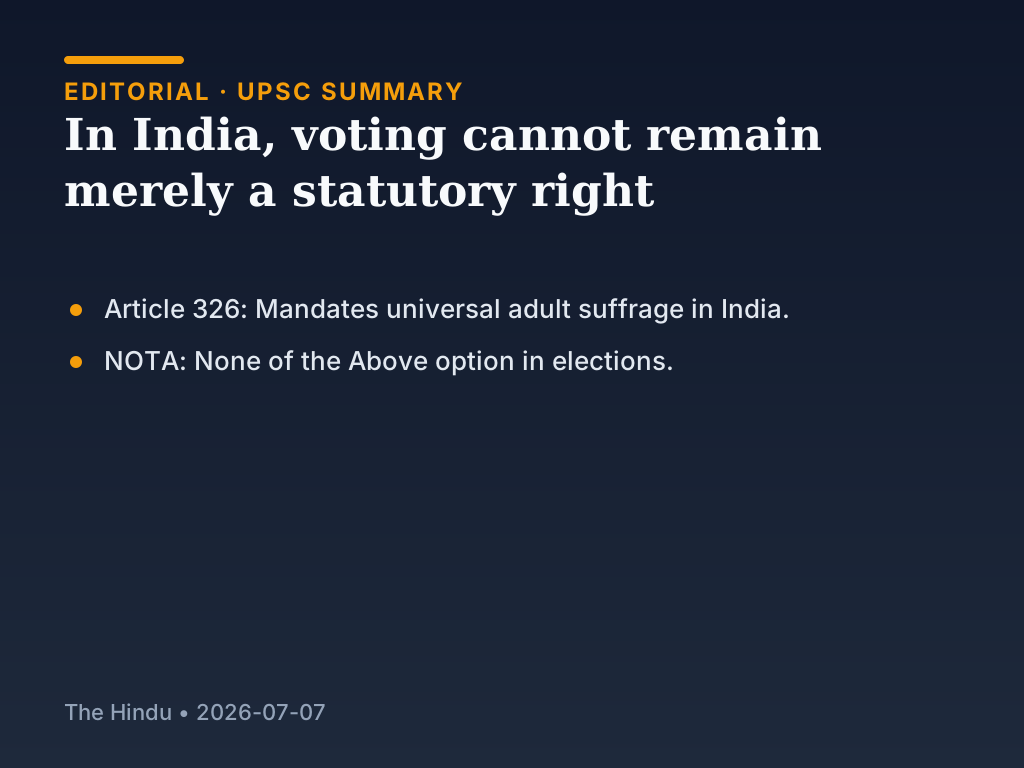
This editorial argues that Indian constitutional jurisprudence has created a conceptual mismatch: while the Supreme Court has historically treated the right to vote as statutory rather than fundamental, later decisions have constitutionally protected many core aspects of electoral participation, producing a paradox.
It recounts the traditional doctrine that the right to vote and the right to contest are not fundamental rights but arise from election statutes, citing early rulings such as N.P. Ponnuswami (1952) and later confirmations including Jyoti Basu (1982) and Kuldip Nayar (2006). The editorial explains that this approach is rooted in the Constitution’s structure: Article 326 mandates universal adult suffrage, while the Constitution does not explicitly place voting in Part III fundamental rights, leaving Parliament discretion over election qualifications, disqualifications and procedures.
However, the editorial emphasizes that since the early 2000s the Court has gradually constitutionalised key electoral dimensions. It notes decisions that recognised voters’ rights to information about candidates’ criminal antecedents, education and assets, grounded in freedom of speech and expression as necessary for meaningful participation. It also highlights distinctions that protect the freedom to vote as an informed choice, and it points to the NOTA (None of the Above) jurisprudence that treats rejecting all candidates as a form of political expression protected under Article 19(1)(a), extending ballot secrecy to those who abstain.
Related current affairs
- Holding the Court accountable amid democratic strain
- Supreme Court statement says allegations against sitting judge must follow institutional mechanism
- SC notice to Jharkhand on plea on exam irregularities
- THE GIST (SC ruling on ‘industry’)
- How the SC ruling redefined ‘industry’
- T.N. Supreme Court photo: Raise proportionate quantity issue with CWMA (caption/standalone box)