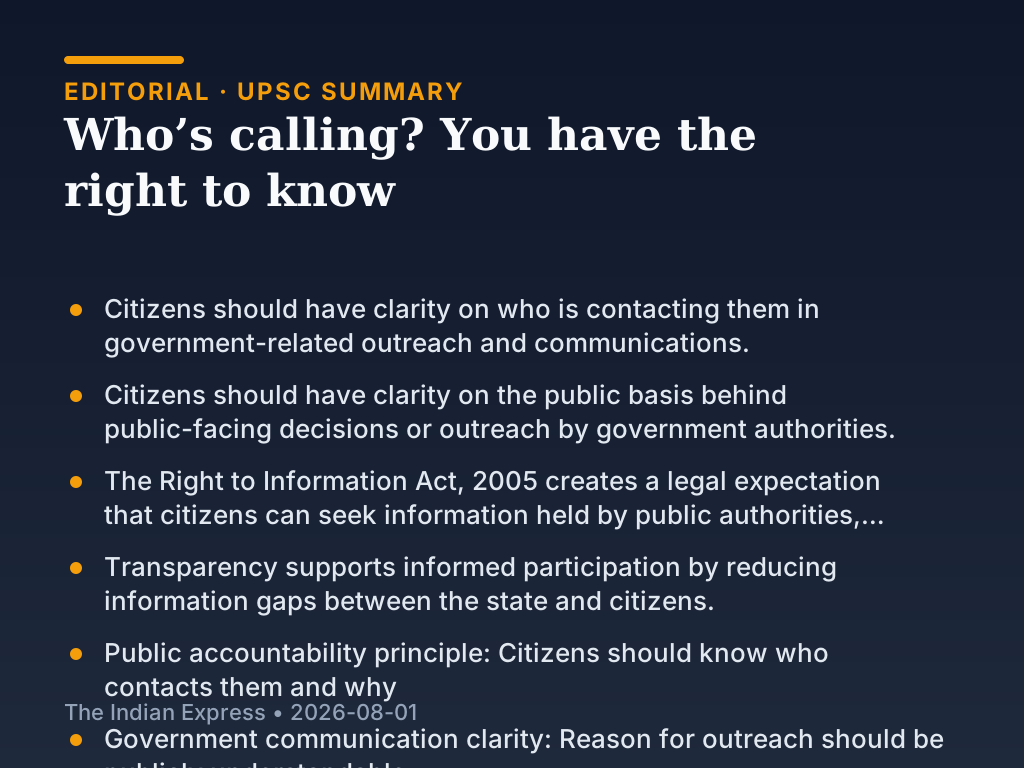
What happened: transparency in government communication and citizen clarity
The current discussion centres on citizens’ right to know in matters involving government communications and information access. The core idea is simple: when government outreach affects citizens or when government decisions are communicated to the public, citizens should be able to understand who is communicating, and why the outreach or decision is made on a public basis.
Background and earlier position: transparency as an accountability norm
In India’s governance framework, transparency is treated as an accountability tool. Access to information and the ability to question public actions help citizens participate meaningfully rather than react blindly to government messages. Under the Right to Information framework, public authorities are expected to provide information held by them, subject to legally defined exemptions and procedures.
What changed now: focus on “who is calling” and the basis for public outreach
The emphasis has moved from general access to information towards the quality of citizen-facing communication. The accountability principle being highlighted is: citizens should have clarity on the identity of the communicator and the public rationale behind outreach or public-facing decisions, so citizens can verify, respond, or seek clarification when needed.