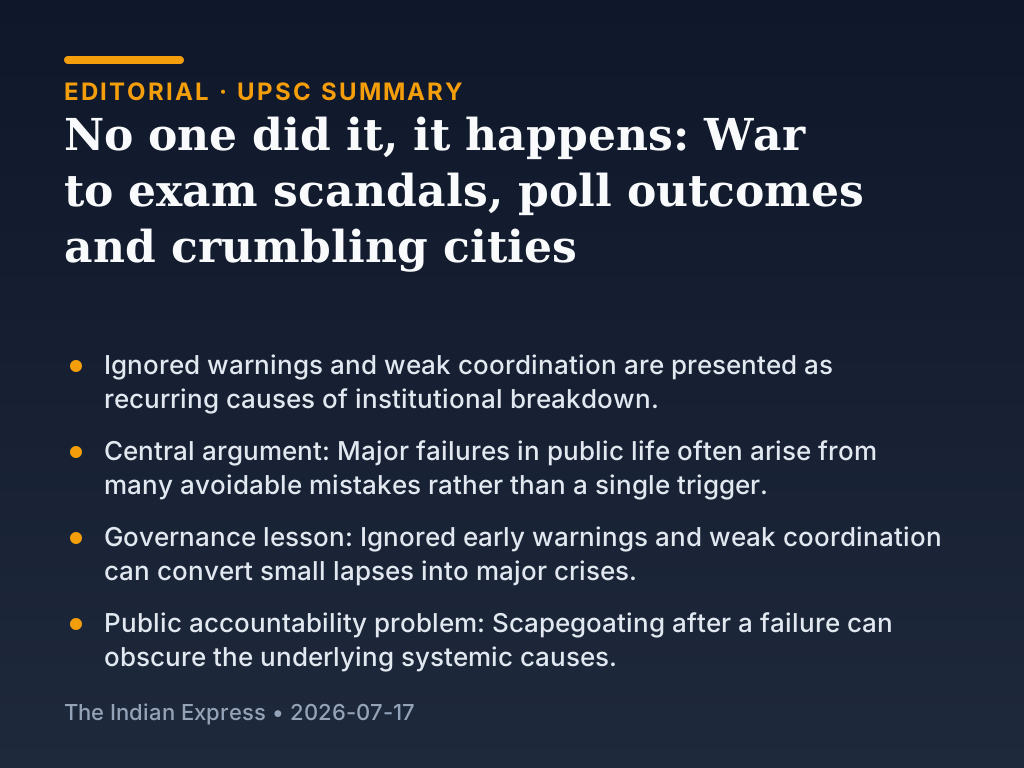
No one did it, it happens: War to exam scandals, poll outcomes and crumbling cities
Editorial on how repeated institutional failures often arise from many small lapses, weak coordination, and scapegoating after damage occurs.
GS2EssayThe Indian ExpressGS2governanceaccountabilityurban governance
The Indian Express editorial argues that large public failures usually come from a chain of ordinary, avoidable mistakes rather than one obvious culprit. Exam scandals, urban decay, infrastructure breakdowns, and political disappointments often grow from repeated small lapses, ignored warnings, weak coordination, and the search for scapegoats after the damage is visible.
Public institutions weaken when leaders do not act on early signals and do not correct small errors in time. A brittle system can then turn one visible breakdown into evidence of many hidden weaknesses.