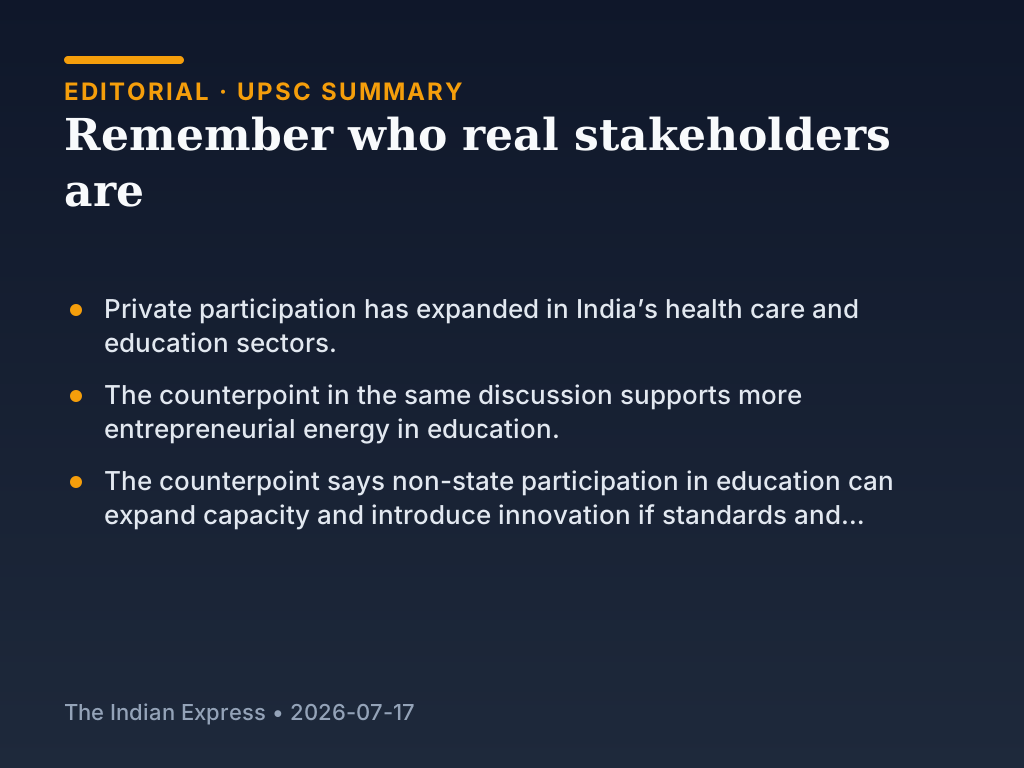
India’s health care and education sectors have seen a larger role for private players. The discussion argues that the central stakeholders must remain patients, students, and families, not providers driven mainly by profit. It says that public systems should be strengthened rather than handed over to market logics because access, accountability, and quality can suffer when commercial incentives dominate.
A counterpoint in the same discussion argues that education needs more entrepreneurial energy, capacity expansion, and innovation. It says private initiative can respond to demand faster than the public system alone and can widen access if standards and regulation remain in place.
Why the issue matters for UPSC
The debate maps directly to GS2 themes on social justice, governance, and the State’s responsibility in delivering public services. It also helps in Essay answers on public versus private provision, equity, regulation, and the limits of market logic in essential services.
Related current affairs
- 48 teachers to be honoured by President on Sept. 5
- Air India FY26 loss more than doubles to ₹22,238 crore
- Parliament Question: Progress of INSPIRE Programme
- Enactment of multiple Maritime and Ports laws (2021–2025) for holistic development of India’s maritime sector
- A first-class school of hard knocks
- Scrap NEET, bring education under State List: TVK