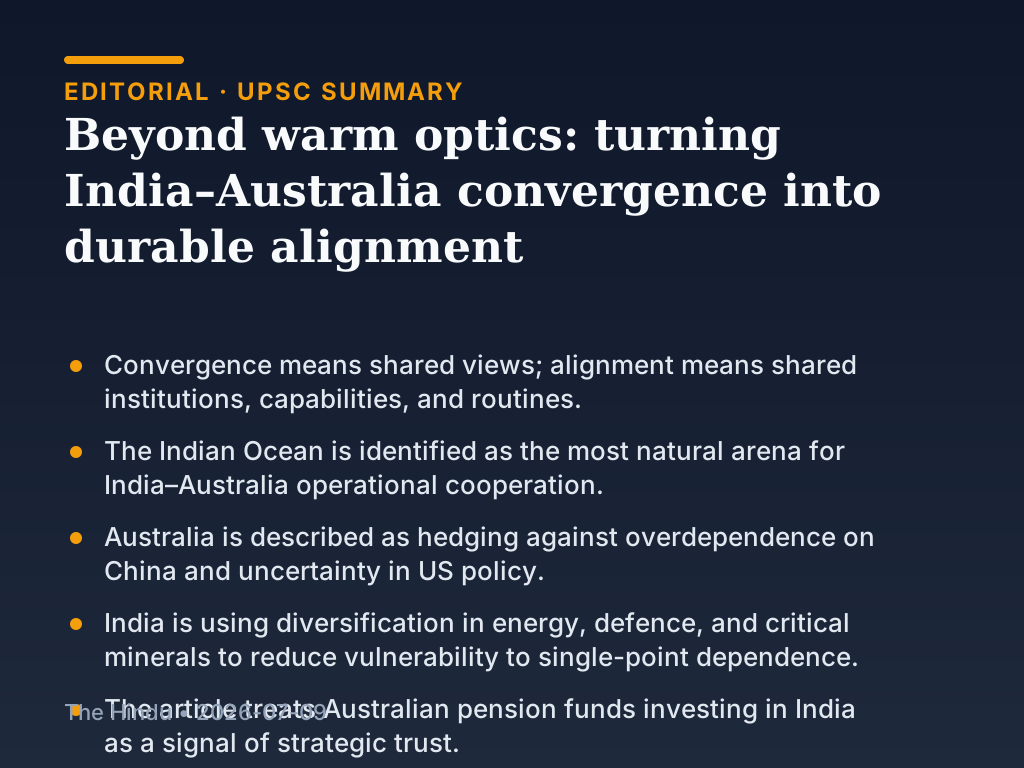
The editorial treats Prime Minister Narendra Modi’s Australia visit as more than a diplomatic event. Its core argument is that India and Australia already agree on the broad direction of the international order, but the harder task is to convert this convergence into alignment through institutions, shared capabilities, and repeatable cooperation.
What happened
The visit produced several concrete outcomes in defence, maritime security, energy, and technology. These include a defence and security cooperation joint declaration, a memorandum of understanding between Australia’s Maritime Border Command and India’s Coast Guard, a maritime security collaboration roadmap, and the launch of the Australia–India Partnership on Cyber, Critical Technologies and Supply Chains (PACTS).
Background and earlier position
The editorial links the current push to broader strategic uncertainty. Australia is said to be hedging against overdependence on China and uncertainty in the United States policy environment, while India is seeking to reduce single-point vulnerabilities in energy, defence, and critical minerals. The article also notes that the Australia–India Economic Cooperation and Trade Agreement has expanded trade, but operational benefits are uneven.
What changed now
Related current affairs
- Much more than ‘Melbourne meets Modi’: India–Australia partnership expands in security, business, education and culture
- Amit Shah and Sarbananda Sonowal review progress on establishing Bureau of Port Security (BoPS)
- Defence and maritime security cooperation: Joint Declaration, Defence Innovation Corridor, and Maritime Security Roadmap
- AI-PACCTS launch and Critical Minerals Corridor for critical minerals and supply chains
- India-Australia Joint Declaration on Defence and Security Cooperation
- Prime Minister’s Address (Economic Roadmap Business Reception): India–Australia economic partnership and sectoral cooperation