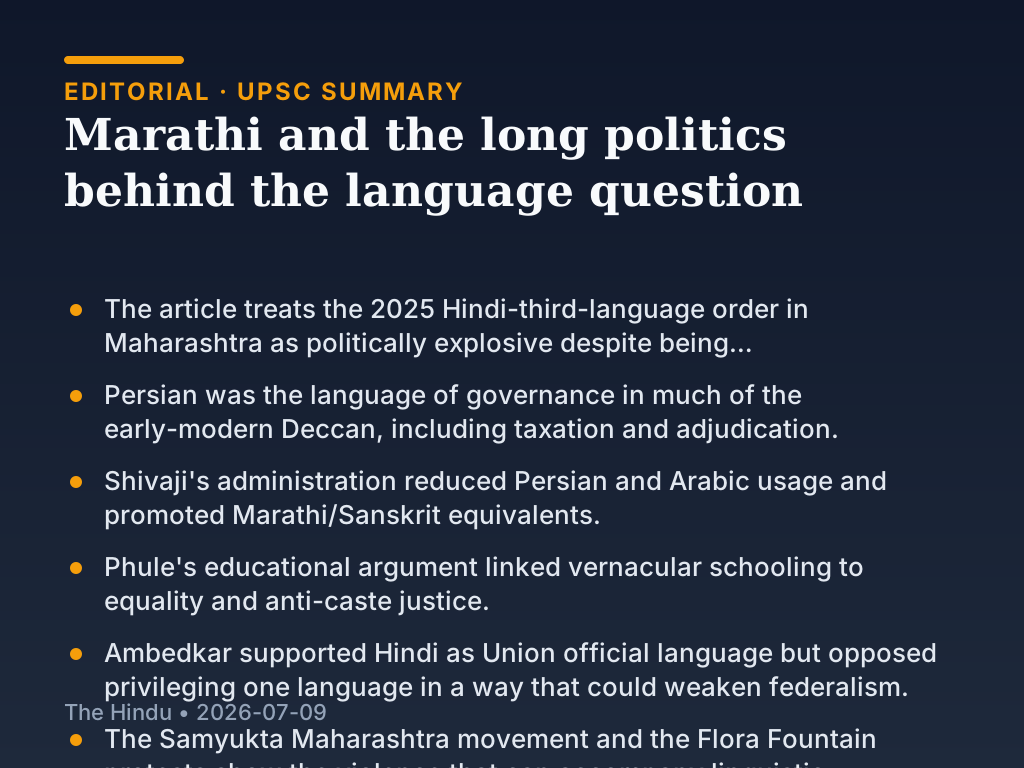
The article examines how a 2025 policy move in Maharashtra to make Hindi a compulsory third language in schools triggered a much older political conflict. The key issue is not only language choice in classrooms, but the larger question of how the State manages identity, education, and power in a multilingual democracy.
Historical background
The article traces Marathi linguistic assertion to the early-modern Deccan, where Persian dominated administration under several polities. Taxation, adjudication, and official work were carried out in Persian, which placed Marathi speakers at a disadvantage and linked language to hierarchy.
It then highlights Shivaji’s administrative response, including the replacement of Persian and Arabic terms with Marathi or Sanskrit equivalents and the creation of a Marathi/Sanskrit thesaurus of state usage. The point is that language reform was organisational, not merely cultural.
The article also discusses Jyotirao Phule’s critique of colonial schooling and his call for compulsory primary education, teacher recruitment from cultivating classes, and instruction in Marathi scripts. It presents vernacular education as a tool of social justice rather than a mark of inferiority.
Later Marathi mobilisation through newspapers and speeches is linked to a wider debate inside nationalism. The article notes Tilak’s support for vernacular education, but also his endorsement of Hindi in Devanagari as a national language, showing that regional assertion and all-India language politics often coexisted uneasily.
Related current affairs
- After Assam and Bihar, Bengal and Maharashtra say ‘no’ to coercive action
- EDUCATION TO EMPLOYMENT: Modi govt ‘ravaging’ Indian youth: Cong.
- Amount approved by Maharashtra to install fire alarm systems (NEWS IN NUMBERS)
- Return whatever was taken away from J&K, says Omar Abdullah
- Governance problems bedevil Maharashtra’s forested area, where three girls died from snakebite at a residential tribal school
- Mines Bill is a grave threat to our federal structure: Kerala CM