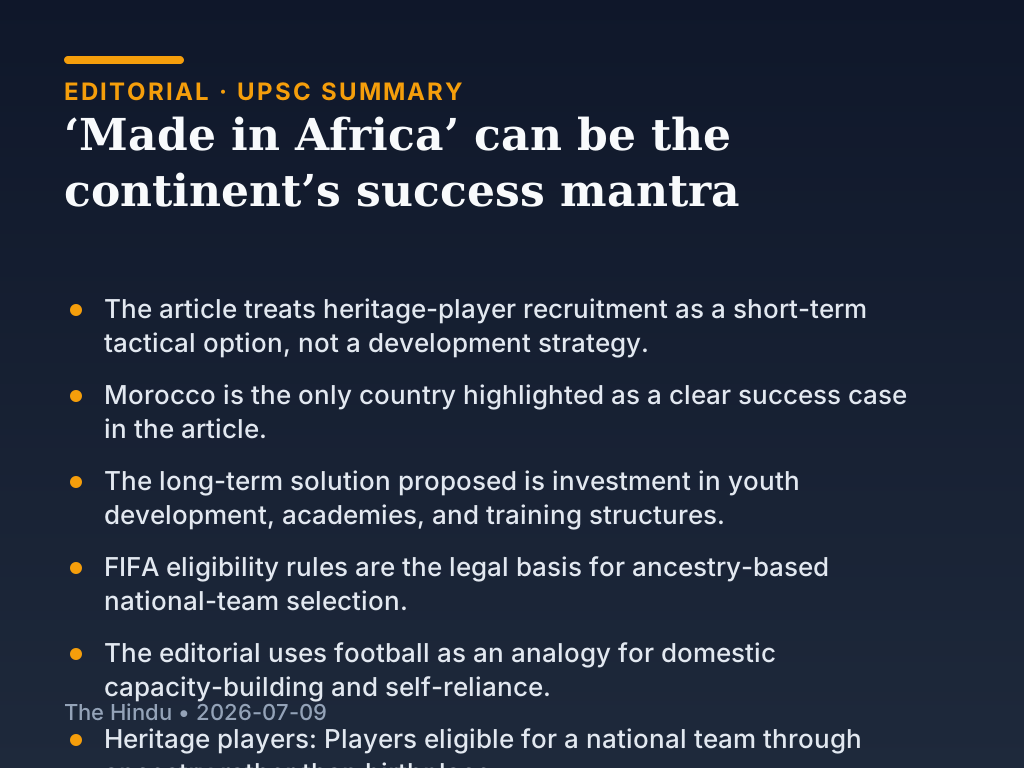
The article argues that African football can use heritage players as a short-term support, but not as a substitute for domestic football development. Its core point is that sustainable success comes from building youth systems, academies, and training structures at home.
Morocco is used as the key example. The editorial says Morocco has benefited from heritage players and has emerged as a standout African side in global tournaments. It contrasts this with most other African teams, which have not converted diaspora recruitment into consistent world-class results.
What the article says about the current practice
The piece notes that some African federations identify players in Europe who are eligible to represent an African country through ancestry rather than birthplace. Such recruitment can happen through formal federation scouting and also through informal and modern networks.
The article’s larger warning is that heritage recruitment should remain a supplement. If the long-term aim is competitiveness, then federations must develop home-grown pipelines so that selection becomes deeper, more self-sustaining, and less dependent on external talent.