What happened: India’s rise is portrayed as ongoing, not finished
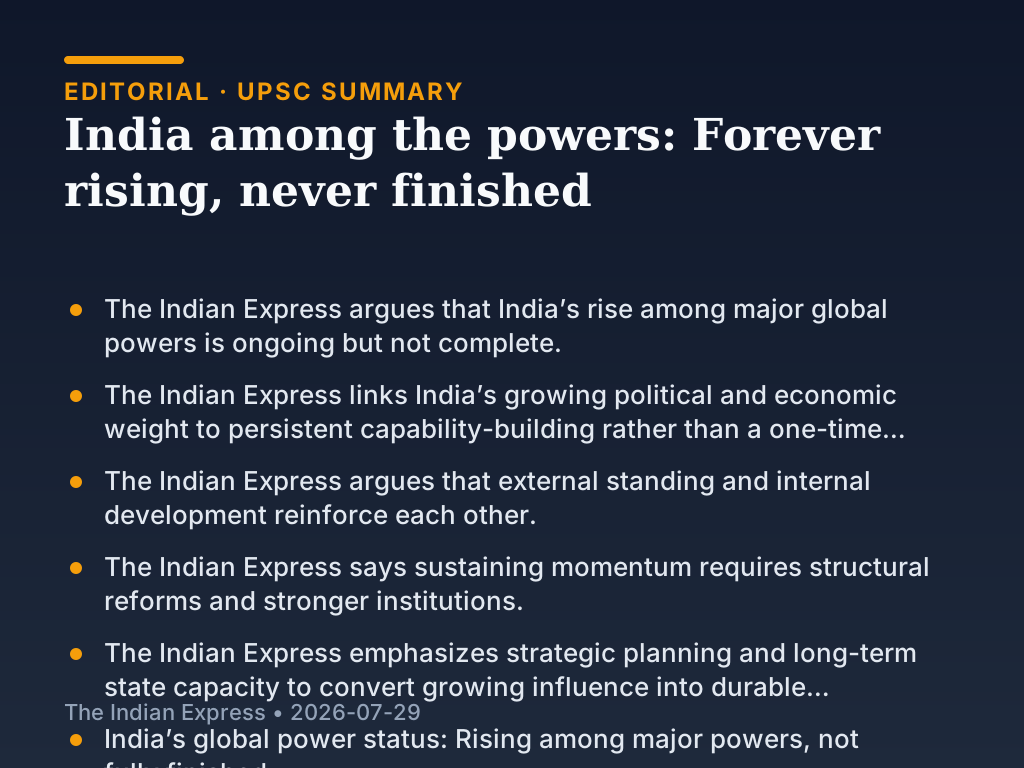
An opinion in The Indian Express presents India’s rise among major global powers as a continuing process rather than a completed transformation. The opinion treats India’s growing political and economic weight as an outcome of persistent capability-building.
Background and earlier position: rising influence as capability-building
The argument connects external standing to internal development. In this framing, international influence becomes more reliable when domestic institutions and policy delivery capacity keep improving over time.
What changed now: emphasis on converting influence into durable outcomes
The Indian Express stresses the need to convert growing external influence into durable outcomes. It warns against complacency and argues that long-term state capacity, strategic planning, and structural reforms are required for sustained momentum.