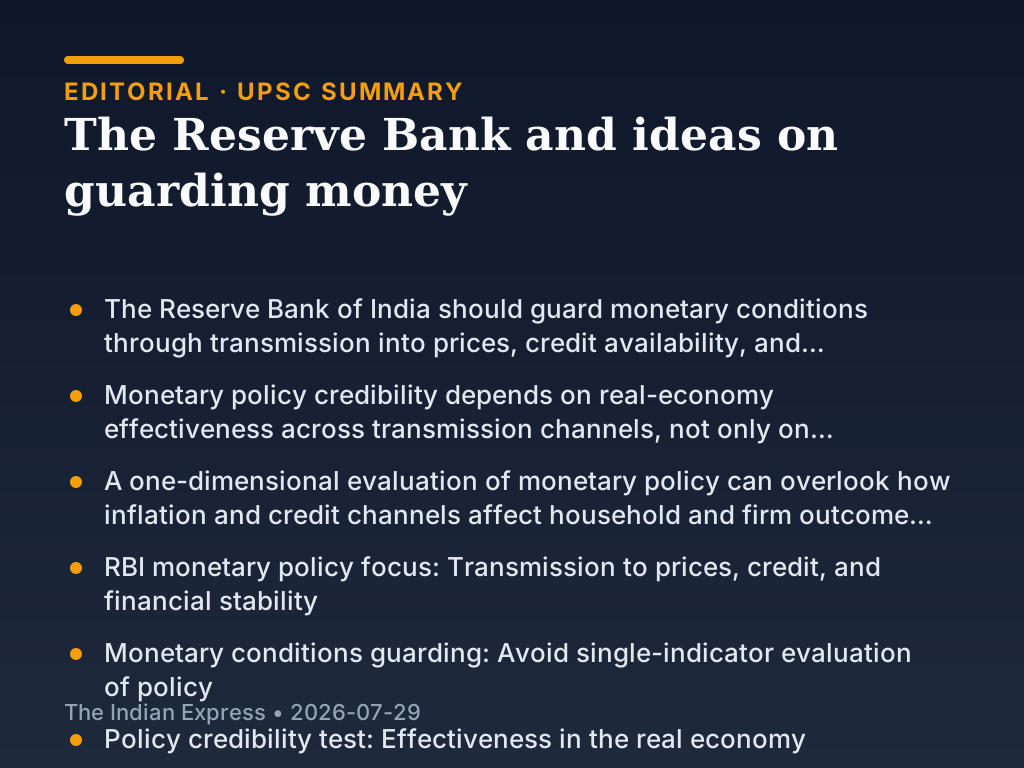
What happened: a call for a broader meaning of guarding monetary conditions
Background and earlier position: credibility often judged too narrowly
Public discussions of monetary policy frequently emphasise financial-market indicators. The argument is that a one-dimensional evaluation can miss the final test of policy effectiveness: whether inflation dynamics improve, whether credit flows support economic activity, and whether the financial system stays stable. Markets may provide signals, but financial-market indicators alone should not be the only yardstick for credibility.
What changed now: connecting policy explanation to transmission outcomes
The argument calls for monetary policy assessment and communication that explicitly links Reserve Bank of India currency and monetary actions to observable economic outcomes. The argument highlights three outcome areas: prices (price stability), credit availability (credit flows to households and firms), and financial stability (the resilience of the financial system). In simple terms, monetary policy explanation should focus on the path from Reserve Bank of India action to real-economy results.