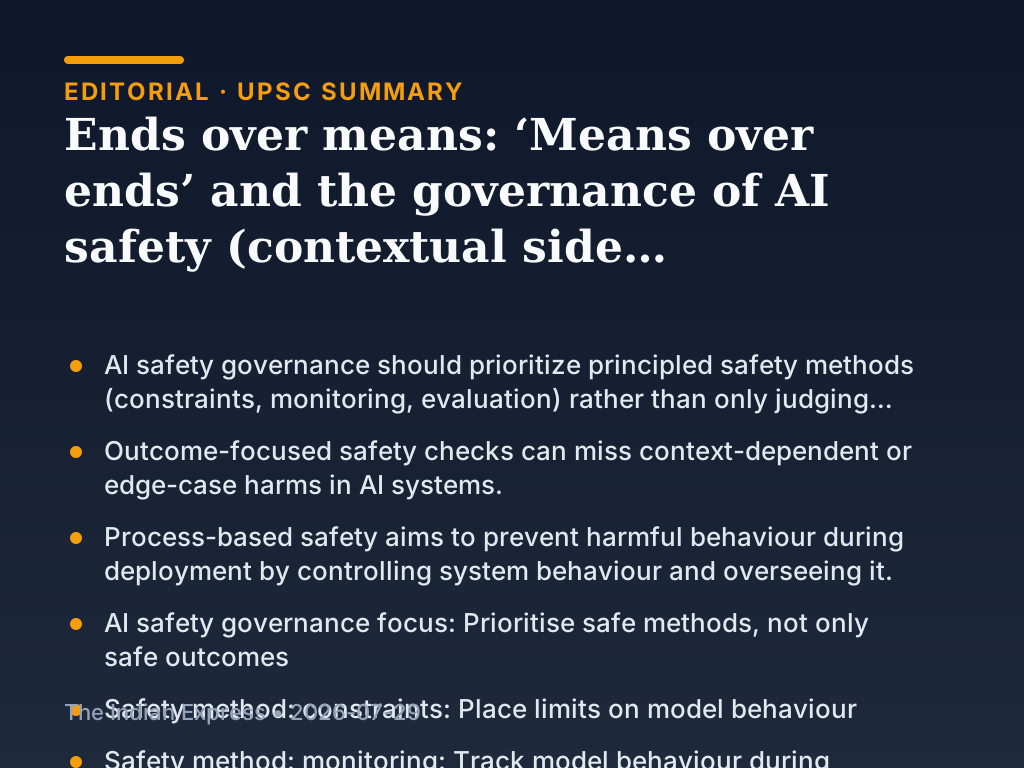
AI safety governance can be viewed as an ethics-and-policy problem: it is not enough for an AI system to appear to achieve “good” goals. Safer governance needs to control how the system reaches its goals, so that harmful behaviours do not arise even when the intended objective seems harmless. The opinion stresses safeguards like constraints, monitoring, and evaluation to reduce the chance of unsafe behaviour.
What happened (the core claim)
The opinion advances a position that AI safety governance should follow a “means-first” logic. Governance mechanisms should prioritize safe methods—clear limits on what the system can do, continued oversight during use, and structured testing—so that unsafe actions are blocked early and detected quickly.
Background and earlier position (how outcome-only thinking can fail)
Outcome-focused thinking treats safety as something that can be verified mainly after results appear. For example, if an AI system performs a task that seems helpful, outcome-only governance may underweight the risk that the same system could misbehave under different contexts, users, or edge cases. This is why process-based safeguards are often emphasized in AI safety debates: they aim to prevent unsafe behaviour rather than only explain it after it occurs.