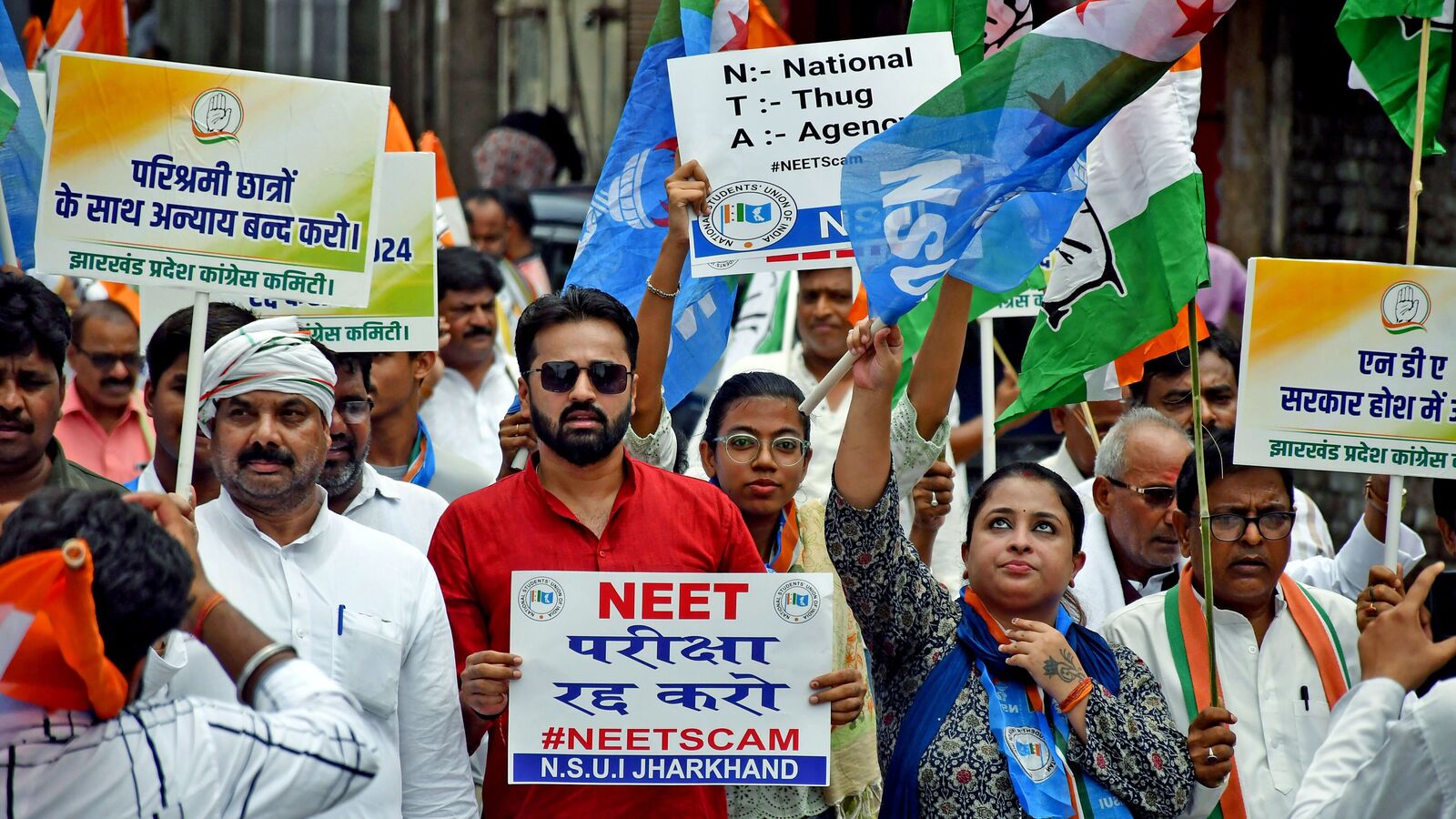
What happened
The Opposition in Parliament refused the government’s proposal for a debate on NEET paper leaks and related irregularities unless Union Education Minister Dharmendra Pradhan resigns first. The dispute has turned the paper-leak issue into a broader question of ministerial accountability, examination credibility, and the government’s handling of student anger.
Student groups, civil society organisations, and political parties expanded the anti-NEET agitation beyond Delhi. The protest wave spread to Tamil Nadu, Kerala, Andhra Pradesh, Uttar Pradesh, Bihar, Haryana, Chhattisgarh, Odisha, Maharashtra, Karnataka, and the northeast.
Delhi remained heavily policed, several metro stations were shut, mobile internet was curtailed in parts of central Delhi, and the Jantar Mantar area was under heavy security. Protesters also demanded education reform, while some groups called for scrapping NEET entirely.
Background and earlier position
Paper leaks in public examinations have become a recurring governance problem in India. The central legal response has now been strengthened through the Public Examinations (Prevention of Unfair Means) Act, 2024, which is meant to deter organised malpractice in examinations conducted by public authorities.
Related current affairs
- No debate before ouster of Minister: Opposition
- Parliament stalled again as Opposition continues to seek Pradhan’s resignation
- Patnaik seeks Pradhan’s resignation over agitation
- Don’t let Opposition hijack students’ protest: Delhi BJP
- Opposition calls Minister’s exit a big victory for the youth and democracy
- In the eye of the storm / Dharmendra Pradhan