What happened
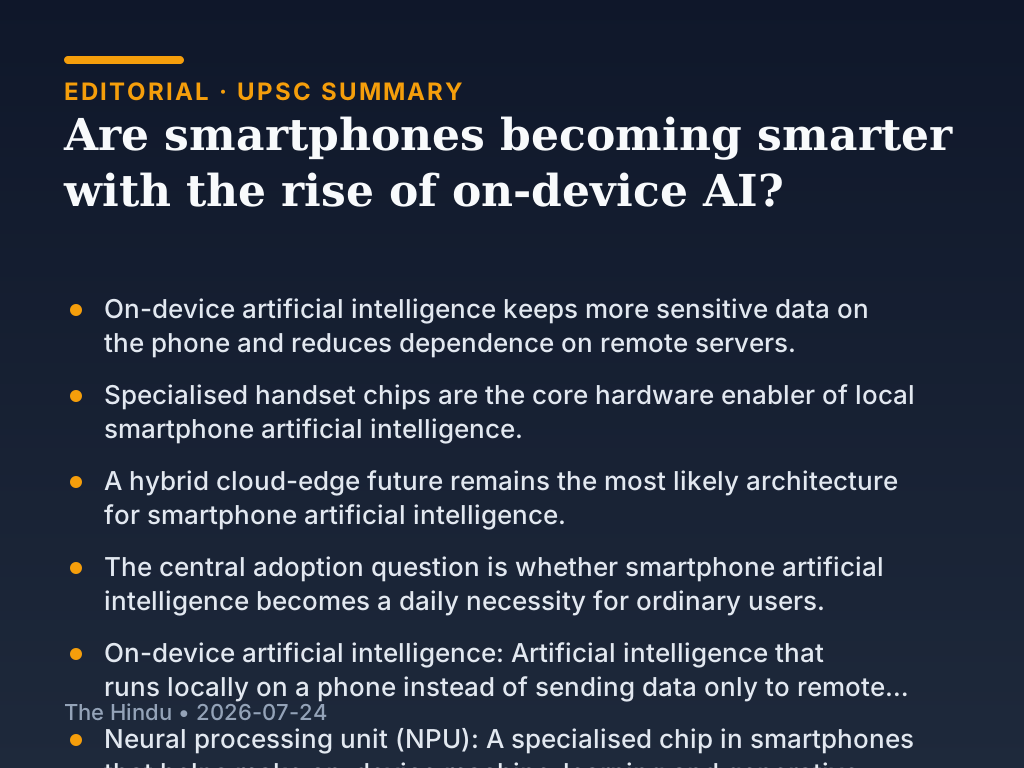
Smartphone artificial intelligence is moving from remote cloud servers to local processing inside the handset. On-device artificial intelligence is becoming practical because modern phones now include specialised hardware such as neural processing units (NPUs) that can run machine-learning and generative artificial intelligence locally.
The shift supports three user gains: faster responses, stronger privacy, and the ability to function offline. Local smartphone artificial intelligence can support real-time translation, advanced camera computation, and proactive system optimisation.
Background and earlier position
Earlier smartphone artificial intelligence relied mainly on the cloud. User prompts and device data were sent to remote servers, where heavier models produced the result before sending it back to the phone.
That cloud-first model offered more computing power, but it also created friction between personalisation and privacy. On-device artificial intelligence narrows that gap by keeping more data inside the handset.
Related current affairs
- AI future needs responsible data regulation
- Jitin Prasada holds bilateral meetings in Morocco on trade, investment and digital transformation
- Smart glasses highlight gaps in privacy laws
- What changes when AI moves from reading viral genomes to designing them?
- Google’s AI advantage faces its biggest test yet
- AI speech recognition model trained on 65 Indian languages and dialects released