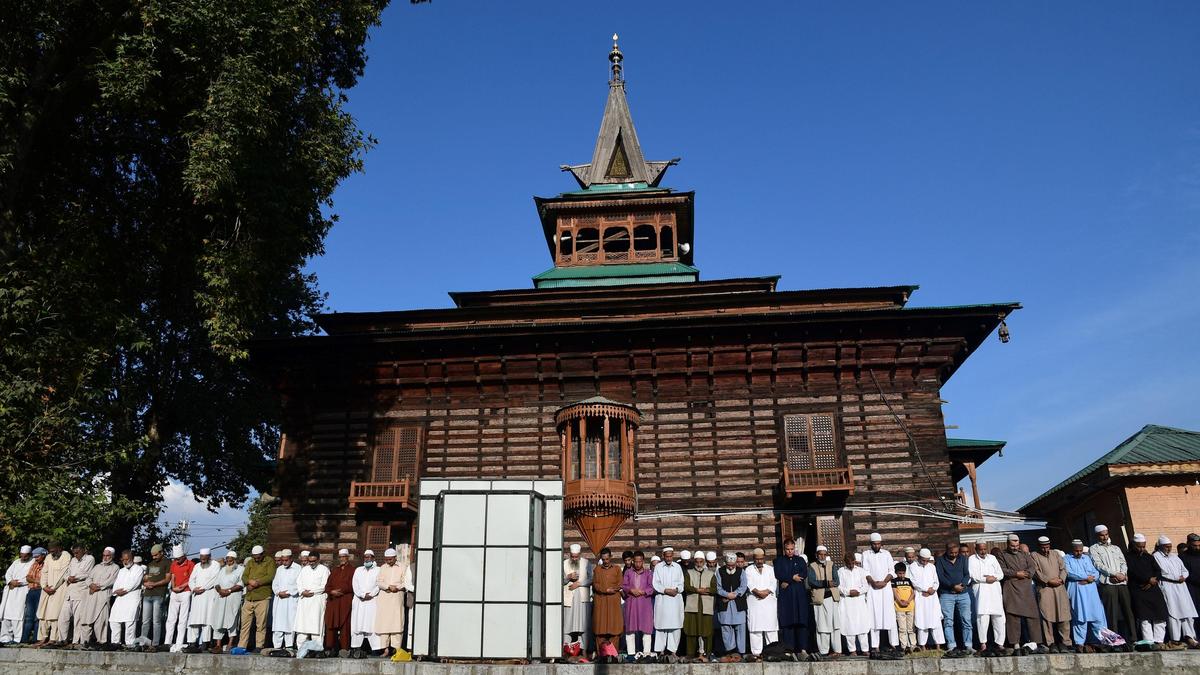
Jammu and Kashmir authorities tightened security around Srinagar’s Naqshband Sahib shrine before the July 13 anniversary of the 1931 uprising against the Dogra monarchy. Police blocked roads, parked vehicles at the shrine gates, and erected barricades to stop regional leaders from paying tributes at the site.
The shrine contains the graves of 22 civilians killed during the revolt. Residents said the police action was aimed at preventing commemorations. The restriction is relevant for UPSC because it combines public order, political rights, and historical memory in Jammu and Kashmir.
Background and earlier position
Since the Centre ended Jammu and Kashmir’s special status in 2019, the administration has prevented regional parties from visiting the graveyard, and July 13 was removed as an official holiday. The issue therefore sits within the broader constitutional and administrative changes in Jammu and Kashmir after 2019.
The National Conference described July 13, 1931 as a historic watershed in the struggle for justice and democratic rights. The party said the 22 unarmed Kashmiris were killed after demanding basic civil and political rights and said it remained committed to carrying forward their legacy.
Opposition leader Iltija Mufti said she and Mehbooba Mufti had been placed under house arrest and criticised what she described as the misuse of police power under the guise of normalcy.
Related current affairs
- Jammu: Man’s killing in Jammu and internet services snapped
- Security stepped up in J&K ahead of ‘Martyrs Day’
- Foundation stone laid for Rs 1,503.53 crore PMGSY-IV roads in Udhampur-Kathua-Doda-Kishtwar region
- Prior permission must for protests, rallies: Ranchi Deputy Commissioner
- J&K Census enumerators raise tech concerns
- Return whatever was taken away from J&K, says Omar Abdullah