What happened
SEBI has permitted asset management companies to offer lifecycle funds with glide-path structures. The idea is to reduce equity exposure gradually as retirement nears, so that a large corpus is not exposed to a sharp market fall close to withdrawal age.
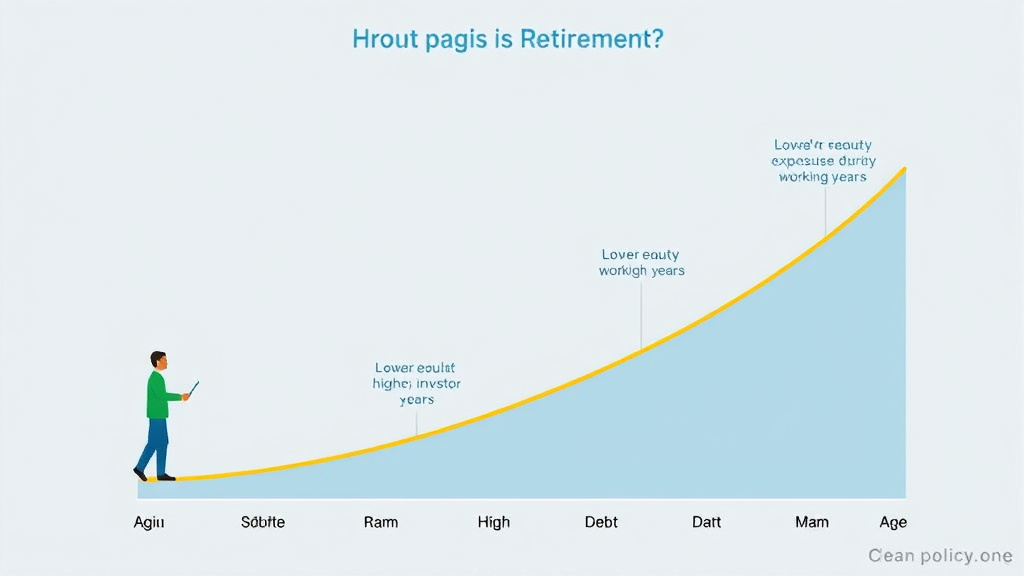
The retirement-investing framework presented here suggests that equity exposure should rise during the working years and then fall as the retirement date approaches. The goal is to seek growth early and protect accumulated wealth later.
A glide path is an age-linked asset-allocation pattern. Equity exposure is higher during working years and declines as the target retirement date approaches. The purpose is to seek growth early and preserve capital later.
The retirement-investing framework suggests that equity allocation should peak around age 45, stay at no more than 70% in a retirement portfolio, then decline gradually until age 55 and remain there until retirement at about 60.
Regulatory structure
Related current affairs
- Amfi streamlines MF transmission process
- SEBI unveils Information Technology Resilience Index (ITRI) for market infrastructure institutions
- SEBI fines two firms ₹3.7 crore for CAS manipulation
- CAS will help detect market manipulators, asserts SEBI chief Tuhin Kanta Pandey
- SEBI pulls up Dhenu Buildcon over round-tripping charges
- CAS here to stay, but open to review for improvement: SEBI (Tuhin Kanta Pandey)