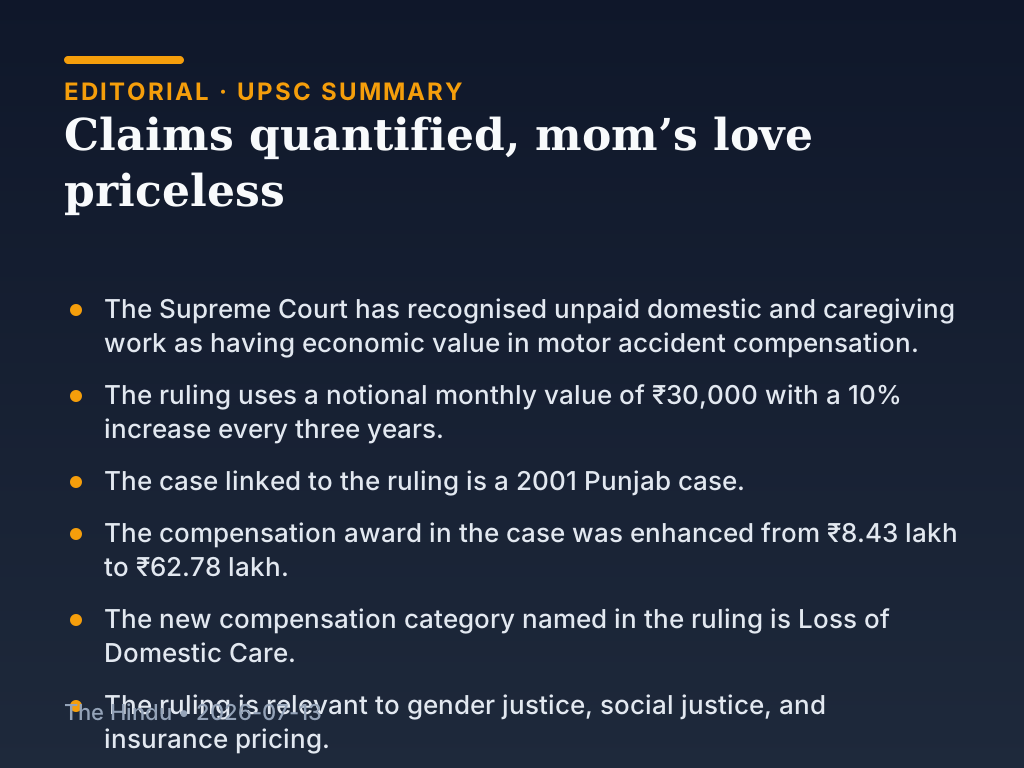
The Supreme Court has recognised unpaid domestic and caregiving work as economically valuable while deciding motor accident compensation. The ruling matters because it changes how compensation law treats homemakers and may affect insurance claims, underwriting, and third-party premiums.
What happened
In a 2001 Punjab case, the Supreme Court held that a homemaker’s contribution cannot be treated as having zero economic value. The Court fixed a minimum notional monthly value of ₹30,000 for domestic and caregiving work, with a 10% increase every three years to reflect inflation.
The earlier High Court award of ₹8.43 lakh was enhanced to ₹62.78 lakh. The ruling creates a new compensation category, Loss of Domestic Care, under the Motor Vehicles Act framework.
Why the ruling matters
The judgment gives legal recognition to unpaid care work, which has long been ignored in compensation law. The writer argues that the ruling does not require husbands to pay salaries to wives; it instead recognises the financial worth of household labour when a motor accident claim is assessed.
Related current affairs
- THE GIST (polygamy explainer)
- Supreme Court statement says allegations against sitting judge must follow institutional mechanism
- SC notice to Jharkhand on plea on exam irregularities
- THE GIST (SC ruling on ‘industry’)
- How the SC ruling redefined ‘industry’
- T.N. Supreme Court photo: Raise proportionate quantity issue with CWMA (caption/standalone box)