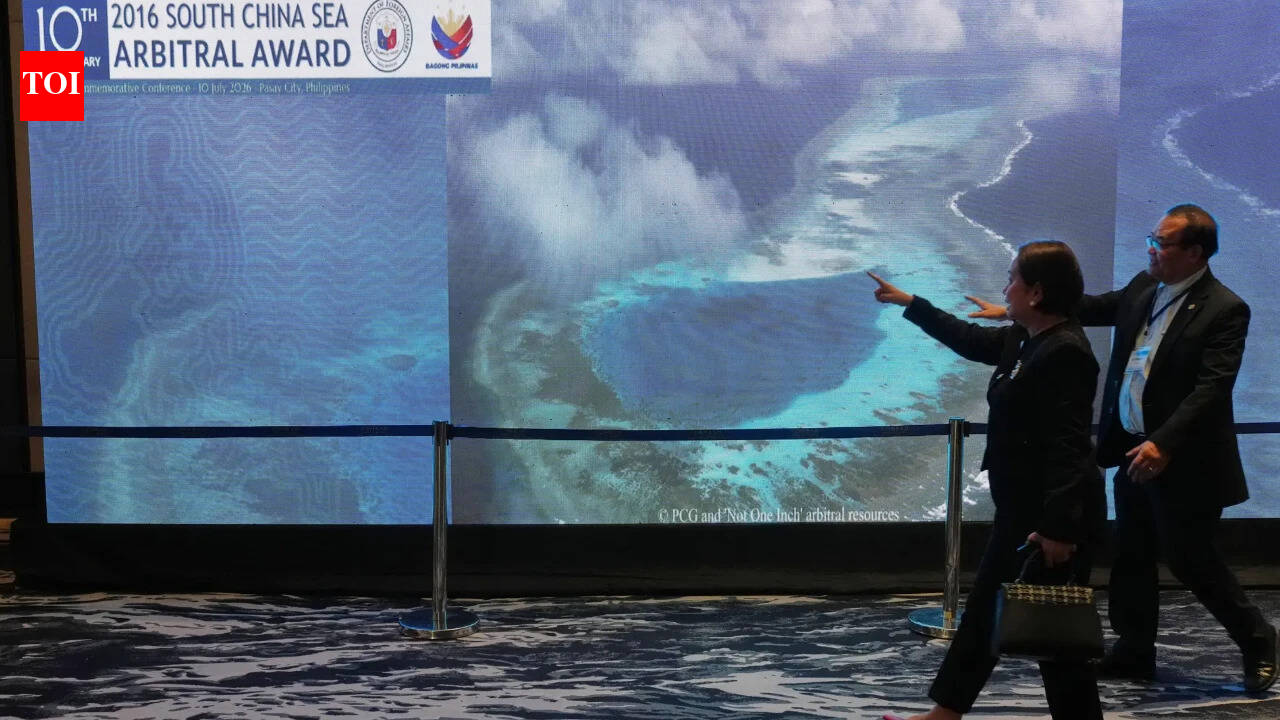
The United States, the United Kingdom, the European Union, and 12 other countries have reaffirmed support for the 2016 South China Sea arbitration ruling that rejected China’s expansive claims. The development matters for UPSC because it combines international law, maritime sovereignty, and regional security in one recurring Indo-Pacific dispute.
What happened
A joint statement by the United States, the United Kingdom, and 12 other Western and Asian nations said China’s expansive South China Sea claims are illegal under the 2016 arbitration decision. The statement also rejected actions described as destabilising in the disputed waters because such actions can threaten regional stability.
The European Union issued a separate statement calling the arbitration ruling a major landmark for peaceful dispute settlement. Both statements referred to the tribunal’s decision under the United Nations Convention on the Law of the Sea (UNCLOS) in The Hague.
Background and earlier position
The Philippines initiated arbitration in 2013 after earlier tensions in the South China Sea, including China’s effective seizure of a disputed shoal. The tribunal later ruled largely in favour of the Philippines and held that the broad Chinese claims had no legal basis under UNCLOS.
Related current affairs
- China says it drove away two more Philippine vessels
- Briefly: Philippines, China summon South China Sea incident
- Spain’s Prime Minister blames trafficking gangs as 60,000 cross into Ceuta in a day; EU calls images ‘unacceptable’
- Benefitting drought: China
- Ten years and 7 PMs later, did Brexit make a difference?
- China begins drills off Taiwan Strait a day after talks with Rubio