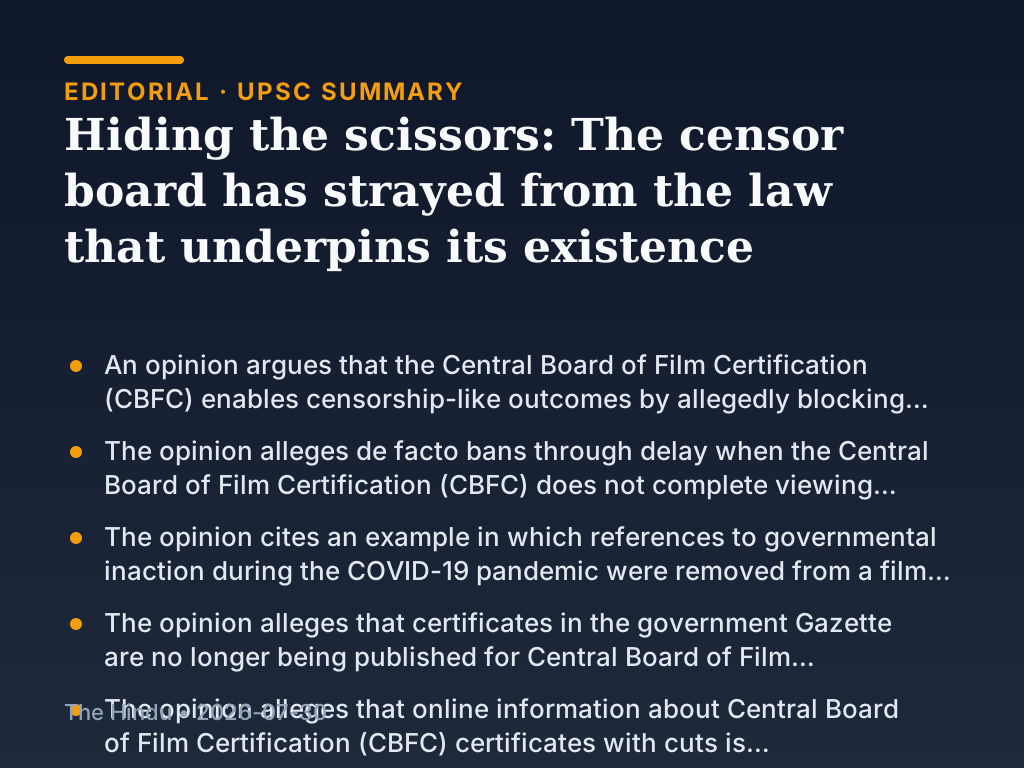
What happened: alleged de facto censorship through delay and concealed certification records
An opinion argues that the Central Board of Film Certification (CBFC) enables censorship-like outcomes by allegedly curtailing filmmakers’ creative visions and influencing which stories get produced and released. The opinion claims that CBFC functioning can block films that are inconvenient to the ruling dispensation and can remove politically hostile material beyond what the Cinematograph framework is meant to allow.
The opinion highlights alleged outcome patterns linked to CBFC processes. First, the opinion alleges that the CBFC does not complete viewing within required timeframes for some films, leading to a de facto ban achieved through administrative inaction.
Second, the opinion cites an example where references to governmental inaction during the COVID-19 pandemic were removed from a film submitted for the Oscars.
Third, the opinion alleges spillover effects into digital distribution. The opinion claims that CBFC certification outcomes influence streaming platforms, even though streaming platforms are not legally bound (in the opinion’s framing) to show censor-modified versions.
Background and earlier position: CBFC decisions must follow the Cinematograph framework
Related current affairs
- ‘Cut list’ on CBFC website remains inaccessible for days
- Malayalam staging of Emergency-era torture fuels debate on artistic freedom
- Seven-judge Bench to hear case concerning legislative privileges from October 6
- ‘Misleading’ information about PM online; after 107 days, Hyderabad man gets bail
- LETTERS TO THE EDITOR: Stop the intimidation
- Shouldn’t there be a law of dissent? (or similar op-ed/column heading)