What happened: India abstained on ILO Convention No. 193 in Geneva
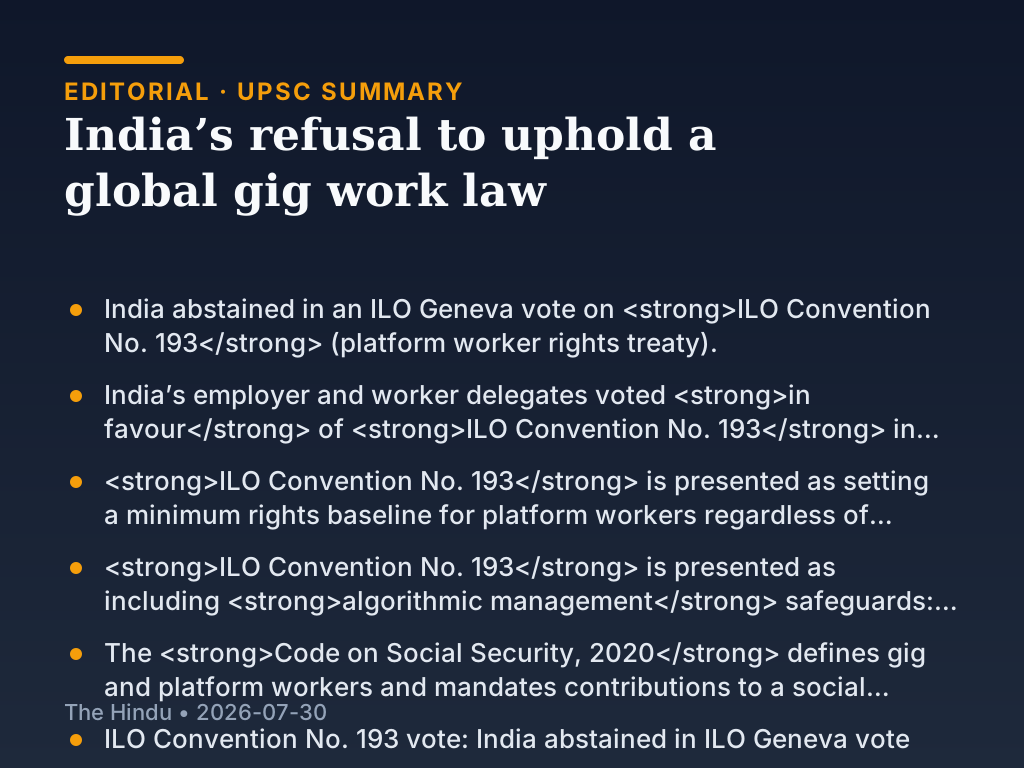
India abstained in an International Labour Organization (ILO) vote held in Geneva on ILO Convention No. 193, a treaty on decent work for platform economy workers. India’s employer delegates and India’s worker delegates voted in favour during the same Geneva vote, while India’s Government chose abstention.
Background and earlier position: India’s ILO ratification approach and gig-worker regulation
The supplied material highlights two background strands. India has ratified many ILO core conventions, but has not ratified some conventions that could strengthen worker rights and workplace protections such as freedom of association and collective bargaining and provisions related to violence/harassment at work.India’s domestic gig-work framework is built around the Code on Social Security, 2020, which defines gig workers and platform workers and mandates contributions to a social security fund. The supplied material characterises implementation as weak or notional, while citing state-level measures such as Rajasthan’s platform-based gig workers law and other state welfare boards.
What ILO Convention No. 193 covers for platform economy workers
ILO Convention No. 193 is presented as establishing a baseline of rights for platform workers intended to apply regardless of how platforms label workers. The convention is linked to these protection areas: Minimum pay and timely payment.Occupational safety and health.Social security protections on terms no worse than comparable workers.Algorithmic management safeguards: disclosure of significant automated decisions, provision of written explanations, and continuing involvement of a human decision-maker.Worker classification rules that focus mainly on how work is actually performed and the nature of the work performed, reducing loopholes based only on contractual labels.