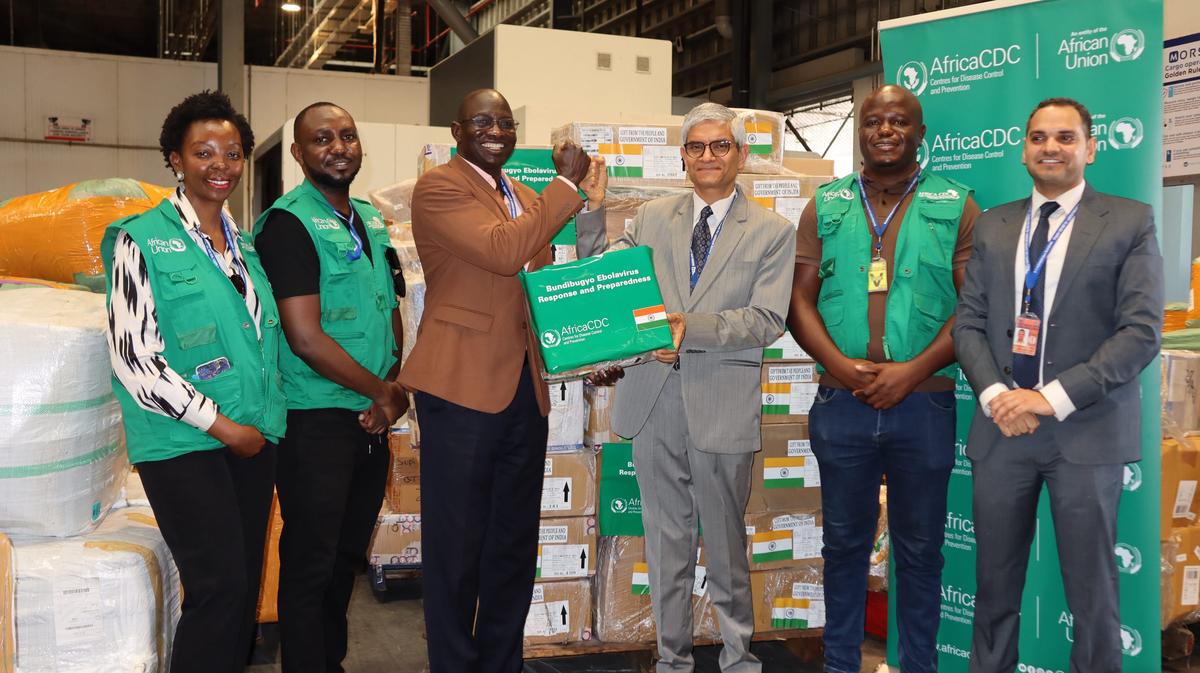
What happened
The Ebola outbreak has worsened, and the death toll is now approaching 1,000. The spread remains active, making the situation a severe public-health emergency.
The outbreak is significant because Ebola requires rapid containment, strong surveillance, isolation protocols, and coordinated field response. Continued transmission also increases pressure on hospitals, laboratories, and frontline response teams.
Why the issue matters for UPSC
The outbreak fits squarely within GS2 and GS3 because it raises questions on public-health governance, epidemic response, and disaster preparedness. It is also a useful case for analysing health-system capacity, crisis logistics, and global health security.
Mains dimensions
Related current affairs
- Briefly: WHO says Ebola outbreak is 47 dead; worst in region
- WHO says Congo’s Ebola outbreak is on track to surpass the deadliest in history
- Who says Ebola outbreak started in Bhutan, alleges external attack
- WHO says Ebola outbreak starts in DRC, not elsewhere
- Congo says toll in fastest-growing Ebola outbreak has passed 1,500
- India using too many overpowered antibiotics meant for specific infections: Study