GS3The Hindu · Editorial
How amino acid leucine helps our cells produce energy
An explainer on how the amino acid leucine may help protect mitochondrial membranes and support cellular energy production.
SP
Samachar Pathshala Desk
Published 12 Jul 2026 · 1 min
Key takeaways
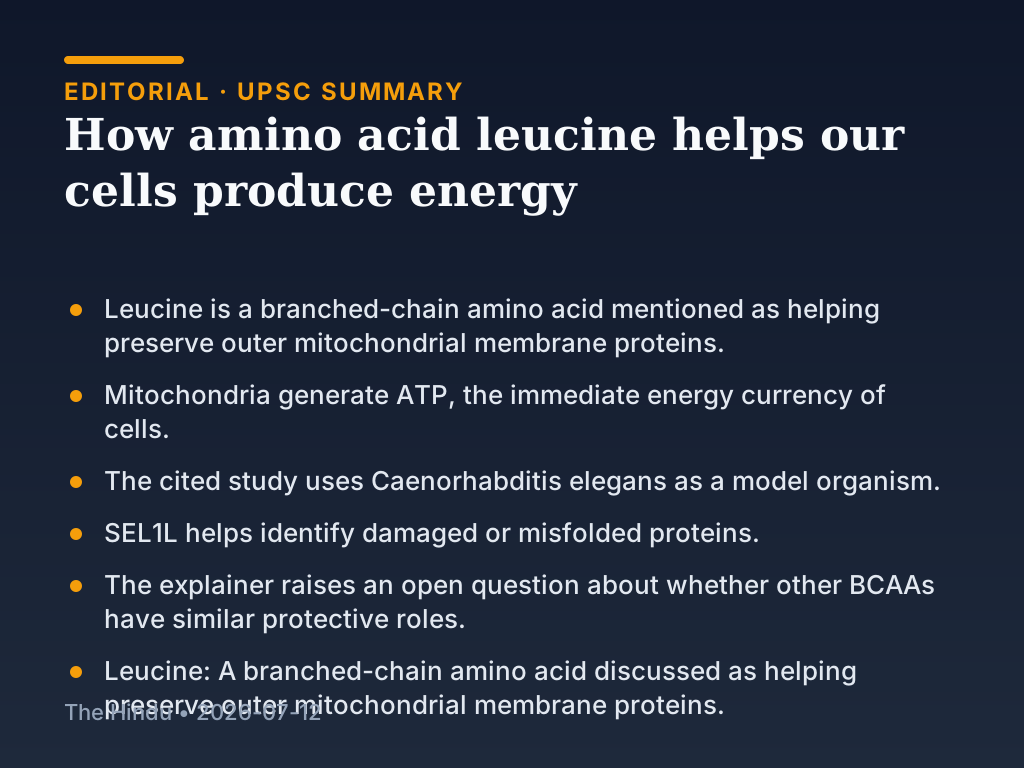
- Mitochondria generate ATP and serve as the cell’s energy-producing organelles.
- Leucine is a branched-chain amino acid discussed as helping preserve outer mitochondrial membrane proteins.
- SEL1L is described as a protein that helps identify damaged or misfolded proteins.
- The cited study uses Caenorhabditis elegans as the model organism.
What happened
D. Balasubramanian’s Speaking of Science explainer discusses how the amino acid leucine may help cells maintain mitochondrial integrity and generate energy. The topic links basic biochemistry to a study in Caenorhabditis elegans, a model organism used to study cellular ageing and metabolism.
Background and earlier position
The UPSC angle
GS3
Cell biology and disease relevance
UPSC may frame the topic around mitochondria, amino acids, and protein quality control, asking how cellular energy production is maintained and why mitochondrial dysfunction matters in metabolic and age-related diseases.