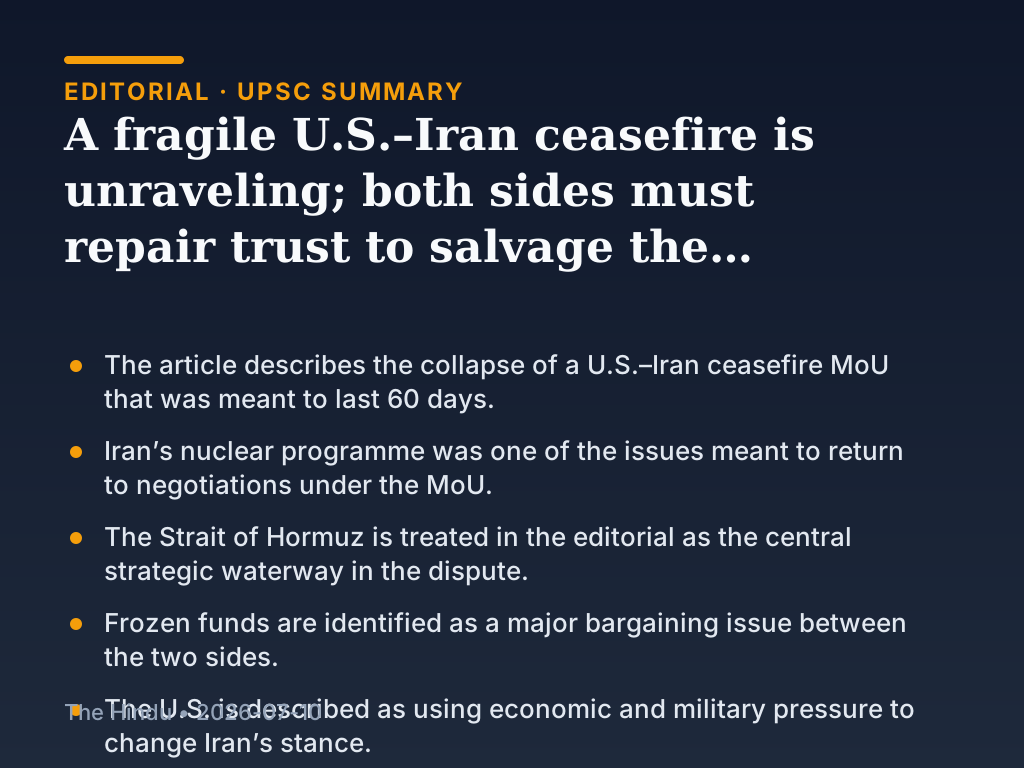
The editorial tracks the collapse of a U.S.–Iran memorandum of understanding that had extended the ceasefire by 60 days and was meant to restart talks on outstanding disputes, including Iran’s nuclear programme. It argues that the arrangement unravelled quickly because confidence-building measures did not match the level of mistrust between the two sides.
What happened
According to the article, the sequence moved from ceasefire to renewed conflict. The United States carried out air strikes in Iran after attacks on tankers in the Strait of Hormuz. Iran retaliated by striking American bases in regional locations, after which the U.S. declared the ceasefire over.
Why the MoU failed to hold
The editorial says the crisis had structural weaknesses from the beginning. It identifies three sticking points that blocked genuine progress: the war in Lebanon involving Israel, the issue of frozen Iranian funds, and the control and navigation regime for the Strait of Hormuz.
On the first issue, the article says there were disagreements over whether the MoU was being violated through related moves linked to Israel’s war in Lebanon. On the second, Iran could not obtain access to its frozen funds despite talks. On the third, both sides differ over who controls safe maritime movement in a vital energy corridor.