What happened (core idea of China’s ecosystem-building)
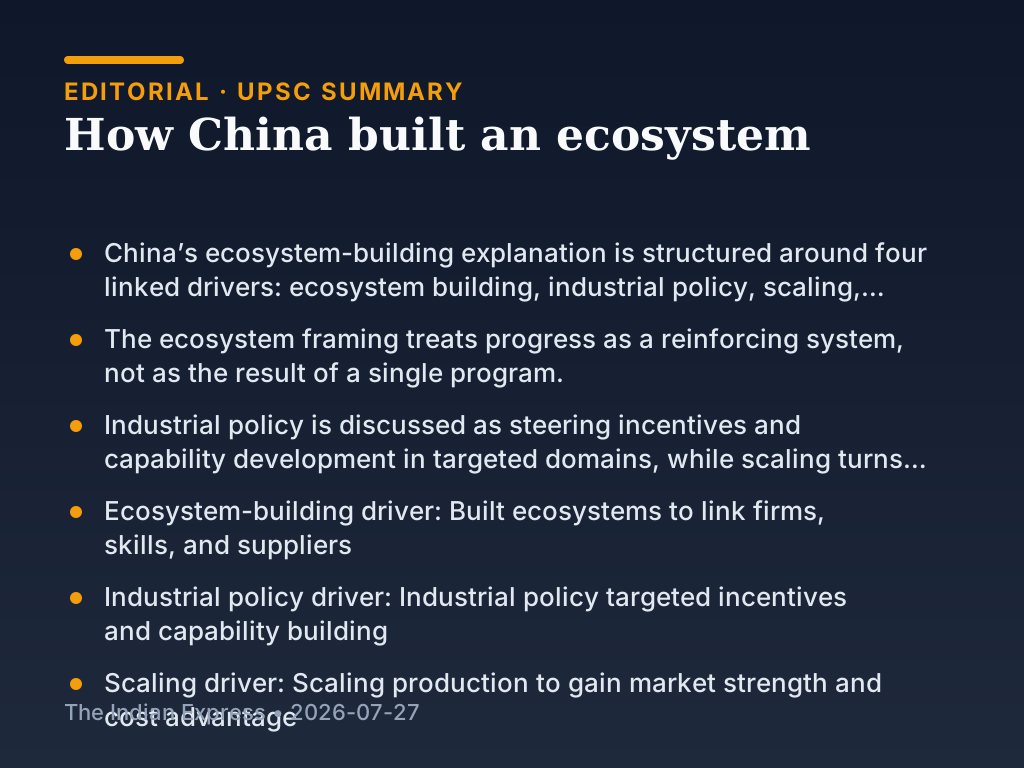
China’s build-up of technology and industrial ecosystems is explained as a deliberate strategy that brings multiple pieces together so that innovation and production reinforce each other. The strategy is described through four drivers: ecosystem building, industrial policy, scaling, and competitive advantage.
Ecosystem building: linking capabilities instead of isolated firms
Ecosystem building means organizing the industrial environment so that upstream suppliers, downstream users, and key supporting capabilities develop alongside each other. The focus is on creating a network of relationships where demand, inputs, and know-how can improve together.
Industrial policy: using government steering while firms execute
Industrial policy is presented as a tool to align incentives and capabilities toward targeted domains. In this framing, the government’s role is to shape the conditions under which firms can invest, learn, and expand, rather than only funding isolated projects.