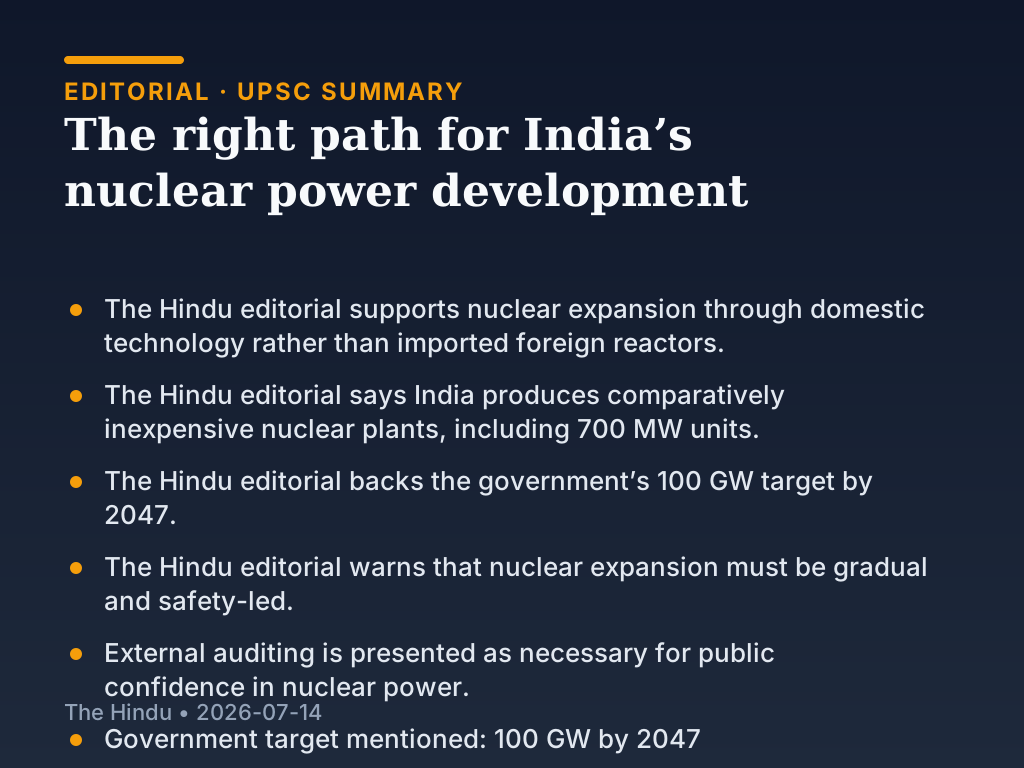
India’s nuclear power debate now centres on whether the next phase of expansion should rely on indigenous technology or imported reactor systems. The Hindu editorial argues that India should rely on domestic design and manufacturing, while expanding capacity with strict safety oversight and gradual deployment.
What the Hindu editorial argues
The Hindu editorial says India now produces comparatively inexpensive nuclear plants, including 700 MW units, because domestic design and manufacturing capabilities improved under external restrictions. It recommends expanding the nuclear sector through Indian firms and proven reactor designs rather than importing costly foreign reactors or equipment.
The Hindu editorial also backs the government’s target of 100 GW by 2047, but argues that expansion should be gradual and safety-led. It cautions against deploying untested foreign small modular reactors first in India.
Why the issue matters
Nuclear power is part of India’s long-term energy-security strategy because it can provide large-scale, low-carbon electricity. The Hindu editorial places emphasis on the trade-off between rapid capacity addition and the need for strong safety culture, external auditing, and public trust.
Related current affairs
- DAE promotes indigenous thorium-based three-stage nuclear power programme for long-term energy security
- Key Policy Measures Announced in 2026 Supporting Manufacturing, Energy Security, Trade/Investment, and Agriculture
- New LPG connections still on hold amid West Asia tensions
- India improvising on the fly as Strait of Hormuz waters remain still
- India Hosts Eighth BRICS Youth Energy Summit 2026 under BRICS Chairship
- Ukrainian drones hit major Russian refinery in Bashkortostan, sparking fire